
Customer Persona Template
Describe the customer you want to serve in writing: who they are, what they need, what worries them, how they decide and how best to reach them. Finish with a one-page summary you can share.
PDF · 11 pages · US Letter · 17 KB · free, no email or signup
Who this is for
This template is for business owners, marketers and freelancers who write, design or sell and want to be clearer about who they are speaking to. It is especially useful before writing a website, planning a campaign, or briefing anyone who creates content for you.
You can fill in one template for each type of customer you serve. Start with the one that matters most.
What is inside
- A quick-start page and an evidence checklist
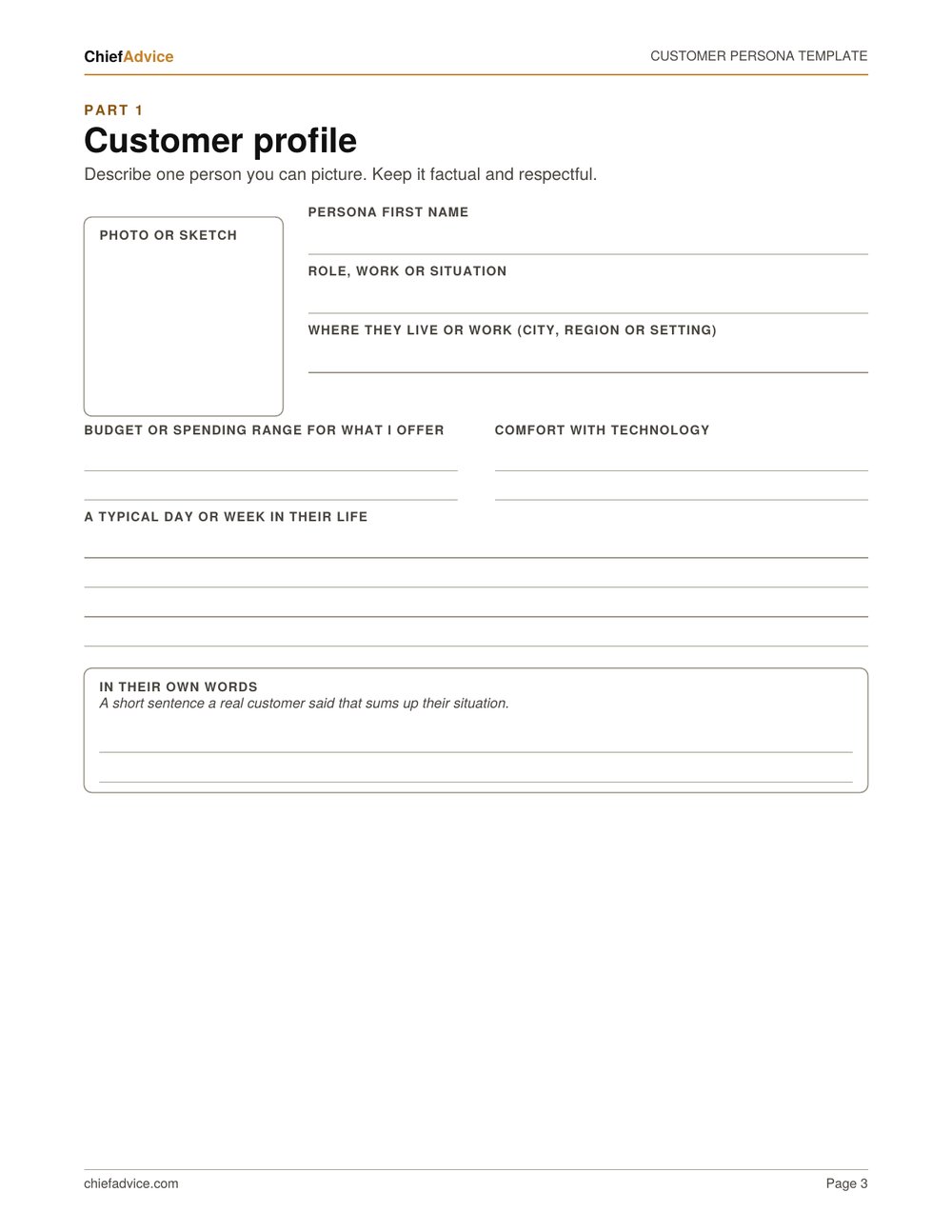
- Customer profile with a first name, situation, budget range and a typical day
- Needs and goals: practical needs, emotional needs and the job they want done
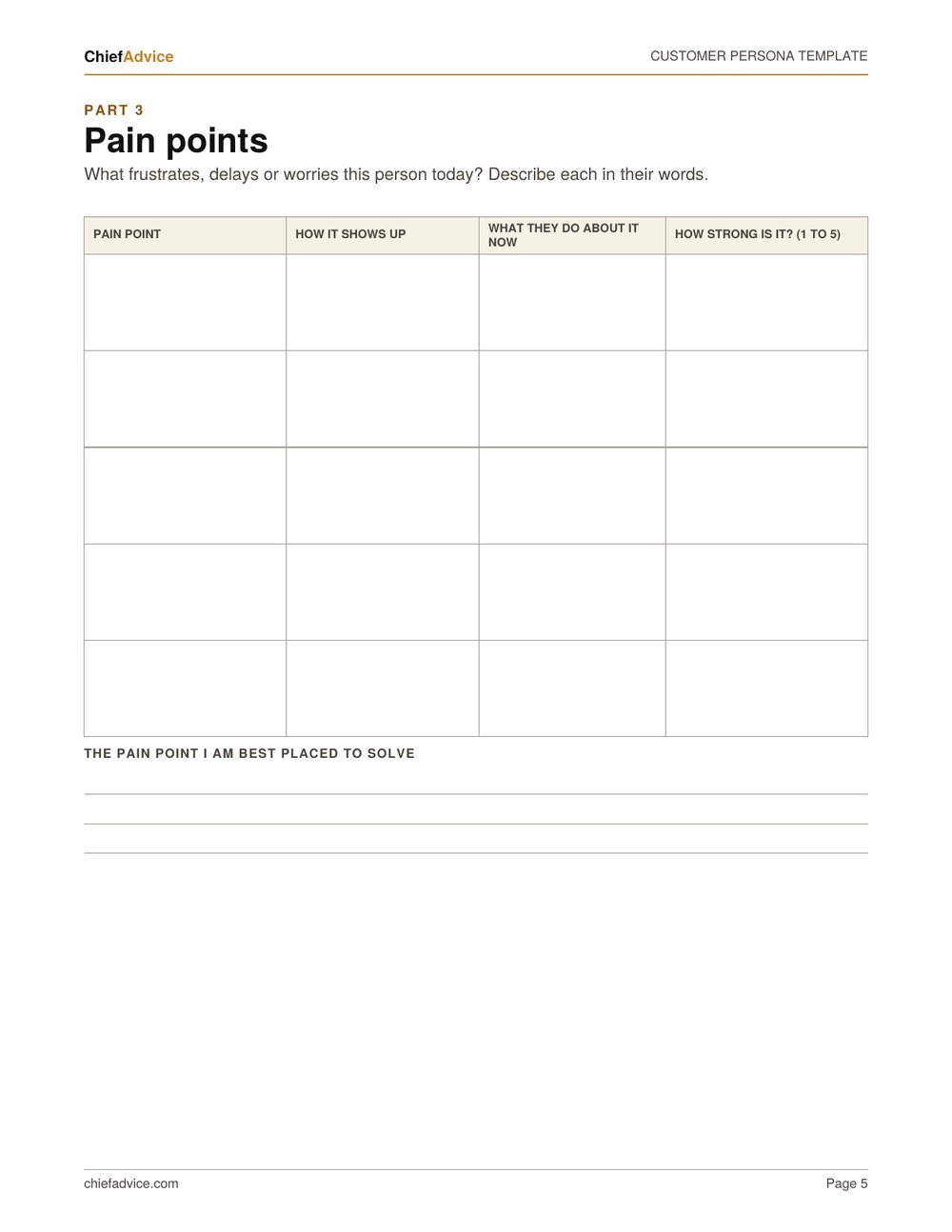
- Pain points with how they show up and how strong they are
- Buying motivations and what triggers a search
- Objections with the worry behind each and how to answer it
- Preferred communication channels, formats and tone
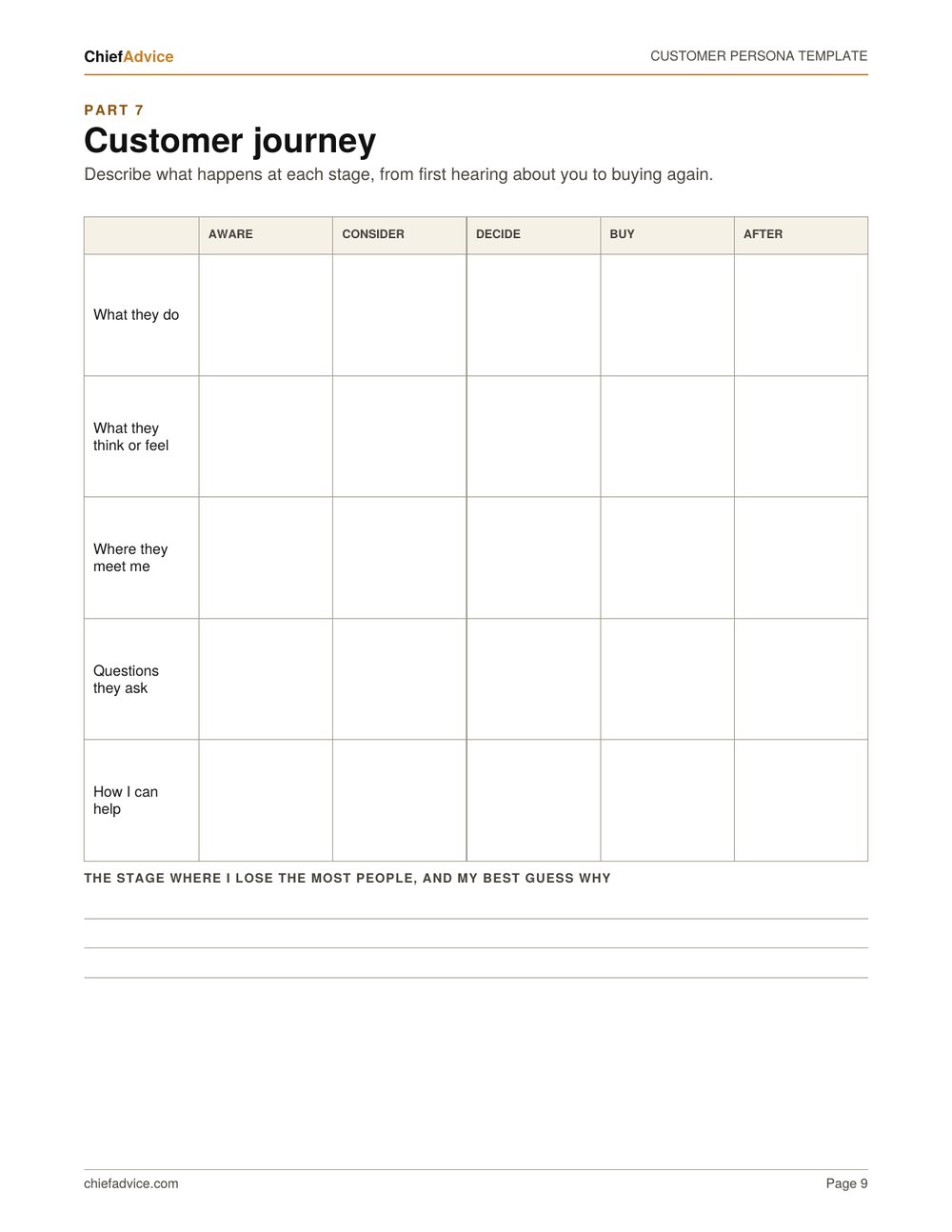
- A five-stage customer journey from awareness to after the purchase
- Messaging opportunities: headline, key messages, words to use and avoid
- A "Persona on a page" summary
A look at the pages
How to use it
Build the persona from evidence. A good first pass takes about an hour, and it improves each time you talk to a real customer.
- Collect evidence. Gather conversations, reviews, messages, survey answers and statistics, and tick what you used on the second page.
- Describe the person. Give the persona a first name and a situation you can picture, using details you have actually seen.
- Capture needs, pain points and motivations. Use the customer's own words wherever you can.
- Map objections and the journey. Note what makes them hesitate and where you lose people along the way.
- Turn it into messages. Complete the messaging page and the summary, and share it with anyone who writes for you.
Printing tips
The planner is designed for US Letter paper with generous margins. On A4 paper, choose "Fit to page" in the print dialog and the layout will scale cleanly. Backgrounds are kept white and colors are light, so it prints well in black and white and uses very little ink. Print only the pages you need, and reprint any page you want to redo.
What a persona is, and is not
A persona is a written summary of a type of customer. It is not a real person, and it is only as good as the evidence behind it. Build it from patterns you see across several real customers, not from assumptions. Avoid stereotypes, and leave out personal details that do not affect how you serve the person. For ways to gather real evidence, read why listening to customers pays off and how to know your audience in depth.
Putting your persona to work
A persona is useful only if it changes what you write and do. Use the objections page to prepare answers (see handling objections), use the journey page to find where people drop off, and use the messaging page when you write your next page or email. Trust matters at every stage, which is why our guide to building trust first is a good companion.
Want to put your persona to work in a campaign? Use the free 30-Day Marketing Planner to plan one month of marketing for this customer.
Related tools and reading
Frequently asked questions
Is the template really free?
Yes. There is no payment, email signup or account. Download the PDF and print it. It is free to print and use for your own business. If you would like to share it, please link to this page.
How many personas do I need?
Start with one: the customer who matters most to your business. Add another only when you serve a clearly different type of customer with different needs.
Where do I find the information?
From real customers: conversations, reviews, support messages, sales calls, surveys and your own sales records. If you have no customers yet, talk to people who match your target audience.
Should I include age, gender and similar details?
Only if they genuinely affect how you serve the person. Situation, goals and behavior are usually more useful than demographics, and they avoid stereotypes.