
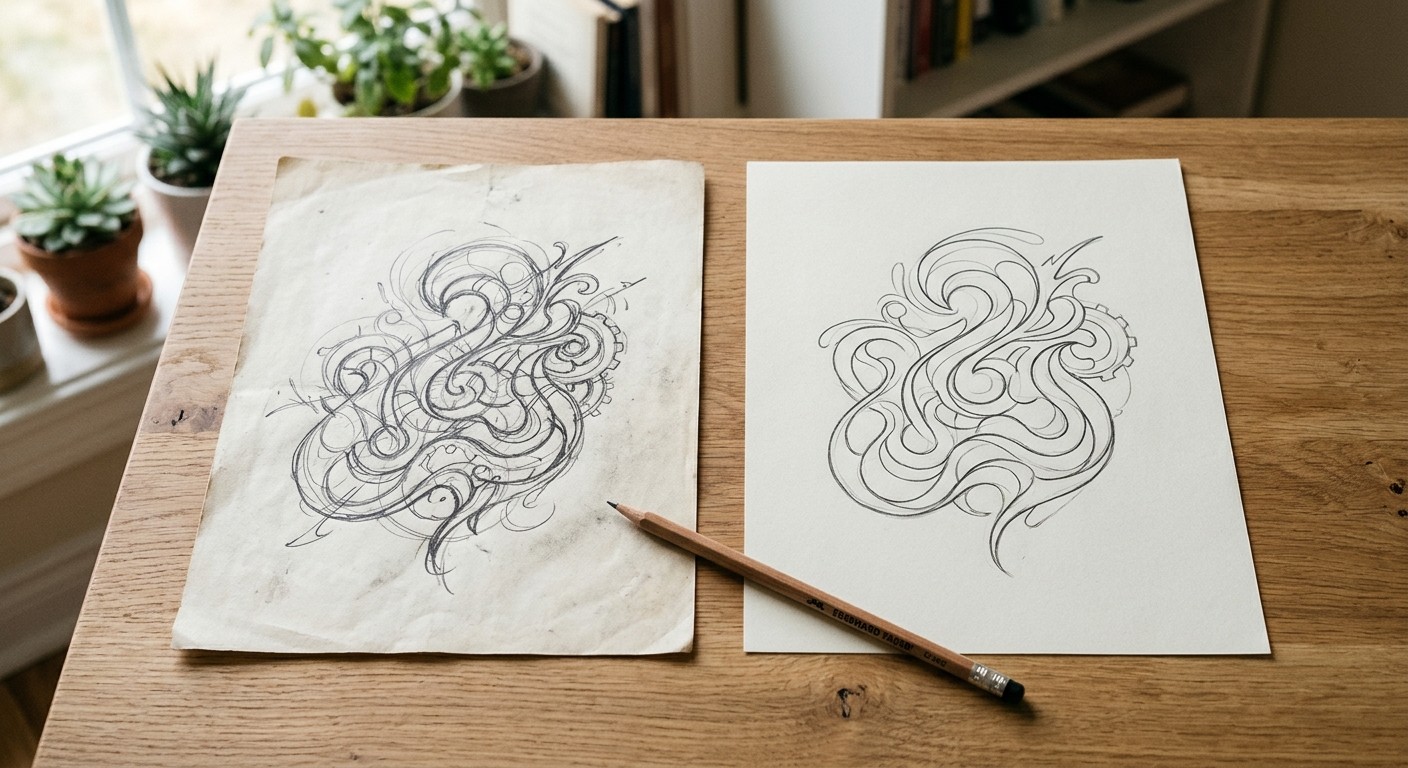
A rebrand is worth the risk when your business has changed and your brand no longer tells the truth about it. It is not worth the risk when the only thing that has changed is how you feel about your logo after looking at it for three years. The first is a growth decision. The second is boredom, and boredom is an expensive reason to throw away something customers already recognize.
This article gives you a way to tell the two apart, two real examples to learn from, and a careful process for changing a brand without losing the recognition it took you years to build.
- Rebrand because your business, audience, or offer has changed, not because you are tired of how your brand looks.
- Customers recognize your brand quickly and from small cues such as color, shape, and name, so changing everything at once is risky.
- A refresh (small updates) and a rebrand (a new identity) are different decisions with different risks. Start with the smaller one.
- List what customers already associate with you before you change anything, and decide what you will keep on purpose.
Good Reasons and Bad Reasons to Rebrand
Before you open a design tool, write down why you want to change. Your reason will decide almost everything that follows.
Good reason: your business outgrew its name or message
You started with one product and now sell something broader, or your audience has shifted. Your name, tagline, or visuals now describe a business you no longer run.
Good reason: your brand is causing real problems
The name is hard to spell or pronounce, it has an unintended meaning in a market you want to enter, or customers confuse you with a competitor. These are problems you can point to.
Bad reason: you are bored
You see your logo every day, so it feels old to you. Your customers see it a few times a month, if that. Your tiredness is not evidence that they are tired.
Bad reason: a competitor changed theirs
Copying a competitor's new look usually makes you less distinct. If you want to stand out, read our article on being different, not better first.
Refresh or Rebrand: Choose the Smaller Change First
Many businesses jump straight to a full rebrand when a refresh would solve the problem. A refresh keeps your name, main colors, and core look, and improves the weak parts: an outdated logo file, inconsistent fonts, or a website that no longer matches your social profiles. A rebrand replaces the identity itself, and may change the name, logo, colors, and message together.
If your current brand is still recognized and mostly works, try a refresh. If you are not sure what is wrong, a structured check comes first, and our guide to auditing your brand shows how to find the real inconsistencies before you change anything.
Tropicana: What Happens When You Change Too Much at Once
In January 2009, PepsiCo launched new cartons for Tropicana Pure Premium orange juice. The familiar picture of an orange with a straw was replaced by a glass of juice, and the look of the carton changed substantially. According to Fortune's report on the later backlash, unit sales fell 20% and dollar sales fell 19% between January 1 and February 22, and Tropicana went back to the original packaging soon afterward.
One caution: those numbers cover only about seven weeks, so other factors cannot be ruled out. But the speed of the reversal suggests the company reached the same conclusion from its own data. A plausible lesson, which many branding writers share, is that shoppers pick familiar products in a moment at the shelf, and when the familiar cues disappear, the product can look like something else.
Customers do not remember your brand guidelines. They remember a few cues, and those cues are what they use to find you.
Dunkin': A Change Tied to a Real Business Shift
The contrast is Dunkin'. In September 2018, the company announced that Dunkin' Donuts would become simply Dunkin' starting in January 2019. The company's reason was concrete: it said beverages made up about 60% of its U.S. sales, and it wanted to be seen as a beverage-led, on-the-go brand. According to WGBH's coverage, the company kept selling donuts. Press reports also noted that the shorter name had been tested in stores before the announcement.
You do not need Dunkin's size to copy the logic. The change followed a real shift in what the business sold, it kept the part of the name customers knew best, and it did not remove the product people already loved. Whether you personally like the new name is beside the point. The decision was based on how the business had changed, not on a design mood.
What to Keep: The Recognition Inventory
Before you decide what to change, decide what to protect. List every cue a customer could use to recognize you, then mark each one as keep, adjust, or replace.
A good rule is to change as few of these as your reason requires. If your problem is that the name no longer fits, you may keep your colors and logo shape. If your problem is an outdated look, you may keep your name and your tone of voice. Our article on the squint test is a quick way to check whether a new logo is still recognizable at small sizes.
A 5-Step Plan to Rebrand Carefully
Step 1: Write the reason in one sentence
Finish this sentence: "We are changing our brand because ____, and we expect it to help us ____." If you cannot finish it with something specific, you are probably not ready.
Step 2: Ask customers before you design anything
Talk to ten recent customers. Ask what they would tell a friend about you, which words describe you, and what they would be sorry to see change. Their answers show you what to protect.
Step 3: Change in stages when you can
A staged rollout lets you watch the reaction and adjust. Start with the pieces that carry the least recognition, such as a website layout or email design, and move to the name or logo last.
Step 4: Test with real people before launch
Show the new version next to the old one to a small group of customers, and ask what they think each brand sells and who it is for. If they cannot tell it is the same business, you changed too much.
Step 5: Announce the change and explain why
Tell customers what is changing, what is staying, and what benefits them. A clear note prevents confusion and shows that the change has a reason.
Here is a simple example of announcement wording:
The second version names the reason and reassures customers about what stays the same.
An Illustrative Example
The following scenario is a composite meant to show a pattern, not a record of a real client.
Laura started a business called "Laura's Candle Corner." Over three years, she added soaps, diffusers, and gift boxes, and she now sells mostly to people buying gifts online. Her name tells visitors she sells candles in one small corner, which no longer describes her. Laura did not start with a new logo. She wrote her reason, interviewed ten customers, and learned that they valued her scent range and her handwritten notes, not the name. She kept the colors, the tone of voice, and the notes, and changed only the name and tagline. The result felt like the same business, grown up.
3 Mistakes That Make a Rebrand Backfire
Mistake 1: Changing everything at once
When the name, logo, colors, and packaging all change together, customers have nothing familiar to hold onto. Keep at least one strong cue constant.
Mistake 2: Skipping the old customers
A new brand is built for the customers you want, but your current customers pay your bills. Ask them first, and tell them early.
Mistake 3: Forgetting the details outside the logo
Search listings, email signatures, invoices, social bios, and old links keep showing the previous brand. Make a list of every place your name appears and update them together.
Change for a Reason You Can Name
A brand is a shortcut in your customers' minds, and shortcuts take years to build. If your business has genuinely changed, update the brand carefully and explain why. If you are simply bored, put that energy into a refresh, better content, or a better product.
Write your one-sentence reason today. If it names a real change in your business, you have a case for a rebrand. If it names a feeling, wait a month and write it again.
Frequently Asked Questions
What is the difference between a rebrand and a brand refresh?
A refresh updates parts of your existing identity, such as colors, fonts, or layouts, while keeping the name and core look. A rebrand replaces the identity itself and may change the name, logo, and message together.
How do I know if my business needs a rebrand?
Look for concrete problems: your name no longer matches what you sell, your audience has changed, or customers confuse you with another business. If you can only say that the brand feels old, try a refresh first.
Should I keep my old name when I rebrand?
Not always, but keep as much recognition as your reason allows. If the problem is the look, keep the name. If the problem is the name, keep other cues such as colors or tone of voice.
How should I tell customers about a rebrand?
Announce it clearly, explain the reason, and say what is staying the same. Send the message by email and on your main channels before or when the change goes live.