Imagine you discover a small bakery on Instagram. The photos are warm and rustic, with soft lighting and handwritten fonts. You love it. You tap the link in their bio, and suddenly you're on a website with a bright blue template, a different logo and prices that don't match the post you just saw.
For a moment you wonder: "Am I on the right site?"
That moment of doubt is small, but it's expensive. Online, people decide quickly whether to trust you. When your website and your social media look like two different companies, you make that decision harder than it needs to be.
The fix is simple: a regular brand audit. Here's why it matters and exactly how to do one this week.
- Customers often meet you on social media first and check your website second. Both should feel like the same brand.
- Consistent colors, logo, voice and information make you easier to recognize and trust.
- Tropicana and Gap both learned how strongly people react when familiar brand cues suddenly change.
- A seven-point audit covering name, logo, colors, voice, bio, offers and links catches most problems in an hour.
The Two-Brands Problem
Most small businesses don't build an inconsistent brand on purpose. It just happens over time. The website was designed three years ago. The Instagram account was set up by a friend. The LinkedIn page still has an old logo. The Facebook page lists opening hours from before you moved.
Each piece made sense when it was created. Together, they tell a confusing story.
And customers do compare. Someone might see your post on social media, search your name on Google, visit your website and then check your reviews, all within a few minutes. Every stop is a chance to build trust or create doubt.
A brand isn't what you say it is. It's what people experience at every place they meet you.
Why Consistency Builds Trust
Our brains love patterns. When we see the same colors, logo and tone again and again, recognition becomes automatic. That's why you can spot a familiar brand on a crowded shelf without reading a single word.
Consistency helps in three practical ways:
Recognition
People remember you faster when every channel uses the same visual cues. Each post adds to the same memory instead of starting from zero.
Trust
A matching website and social profile signals that a real, organized business is behind it. Mismatches can look careless, or even like a fake account.
Clarity
When your offer, prices and message are the same everywhere, customers don't have to work out which version is true.
When Big Brands Broke the Pattern
If you want proof of how attached people get to familiar brand cues, look at two famous redesigns.
Tropicana's carton change
In January 2009, Tropicana launched new packaging for its Pure Premium orange juice in North America. The well-known image of an orange with a straw was replaced by a plain glass of juice, and the logo became smaller and harder to spot. Shoppers struggled to find their usual juice, and many thought it looked like a cheap store brand. Sales reportedly fell about 20% in roughly two months. By late February, Tropicana announced it would bring back the old design.
Gap's one-week logo
In October 2010, Gap quietly introduced a new logo, swapping its classic blue box for a plain font with a small blue square. The online reaction was so negative that about a week later the company returned to the original. Its North America president admitted the company "did not go about this in the right way."
The lesson for small businesses isn't "never change." It's that people notice when your brand looks different from what they expect. If big companies can lose customers' confidence with one change, imagine the effect of a website and an Instagram account that never matched in the first place.
Your 7-Point Brand Audit Checklist
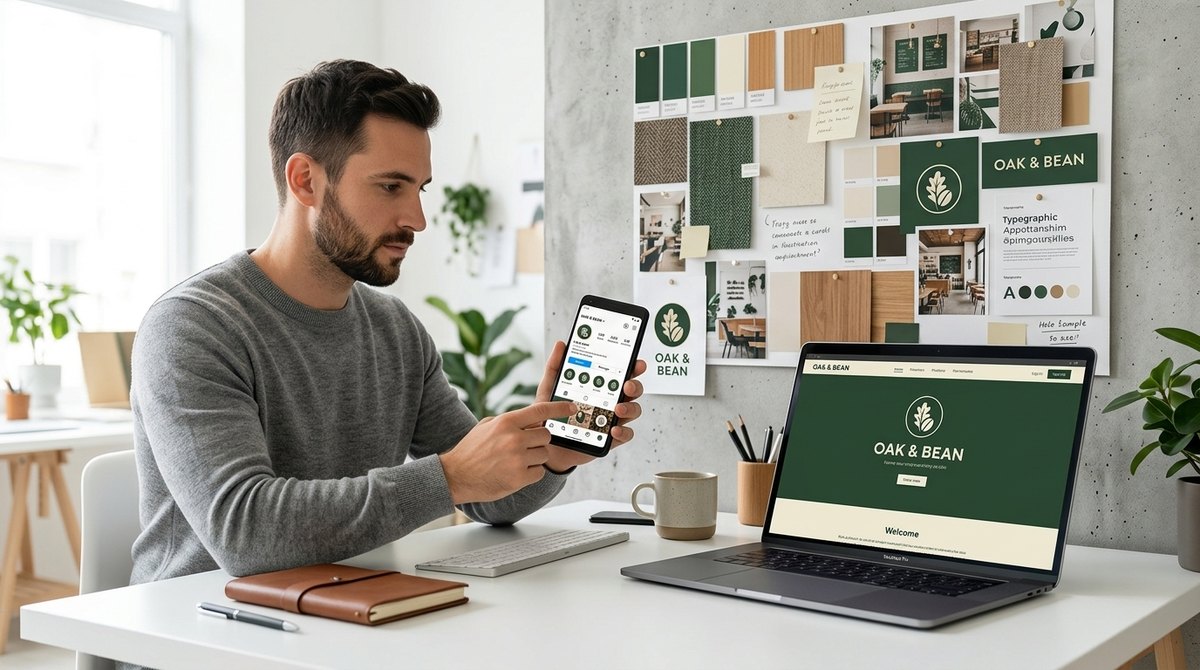
Open your website and every social profile side by side, on your phone if you can, since that's how most customers will see them. Then check these seven points:
1. Name and handle
Is your business name spelled the same everywhere? Are your social handles as close to your name as possible?
2. Logo and profile picture
Is it the current logo, sharp and easy to read in a small circle? Old versions confuse people.
3. Colors and fonts
Do your posts, banners and website share the same two or three main colors and a consistent style of type?
4. Voice and tone
If your Instagram is friendly and playful but your website sounds like a legal document, pick one personality and use it everywhere.
5. Bio and description
Does every profile explain what you do in the same simple sentence?
6. Offers, prices and details
Do prices, opening hours, location and contact details match across your site, social pages and business listings?
7. Links
Does the link in each bio work and go to the right page? Does your website link to your active profiles, not abandoned ones?
How to Fix What You Find
Don't try to redesign everything at once. Work in this order:
- Fix wrong information first. Old prices, hours or broken links cost you customers today.
- Create a simple brand kit. Save your logo files, color codes and fonts in one place. Free tools like Canva let you store a brand kit and reuse it for every post.
- Write one master bio. Use it as the base for every profile, adjusting only for length.
- Close or update abandoned accounts. An empty profile from 2019 does more harm than no profile at all.
- Set a reminder. Repeat the audit every three to six months, or any time you change your logo, prices or offer.
Conclusion: One Brand, Everywhere
Your customers don't think in channels. To them, your website, Instagram, LinkedIn page and Google listing are all simply you.
Set aside one hour this week. Open everything side by side, run through the checklist and fix the biggest gaps first. When every channel looks and sounds the same, trust stops leaking away between clicks.
Frequently Asked Questions
What is a brand audit?
It's a review of everywhere your brand appears, such as your website, social profiles and listings, to check that your name, look, message and details are consistent and up to date.
How often should I audit my brand?
Every three to six months is a good rhythm, plus any time you change your logo, prices, offer or location.
Does my website need to look exactly like my social media?
Not identical, but clearly the same brand. Use the same logo, main colors, fonts, tone of voice and key information.
What should I fix first?
Fix wrong or outdated information first, like prices, hours and broken links. Then work on visuals and voice.
What is a brand kit?
It's a simple collection of your logo files, color codes, fonts and tone guidelines, kept in one place so everything you create stays consistent.