
Competitor Analysis Worksheet
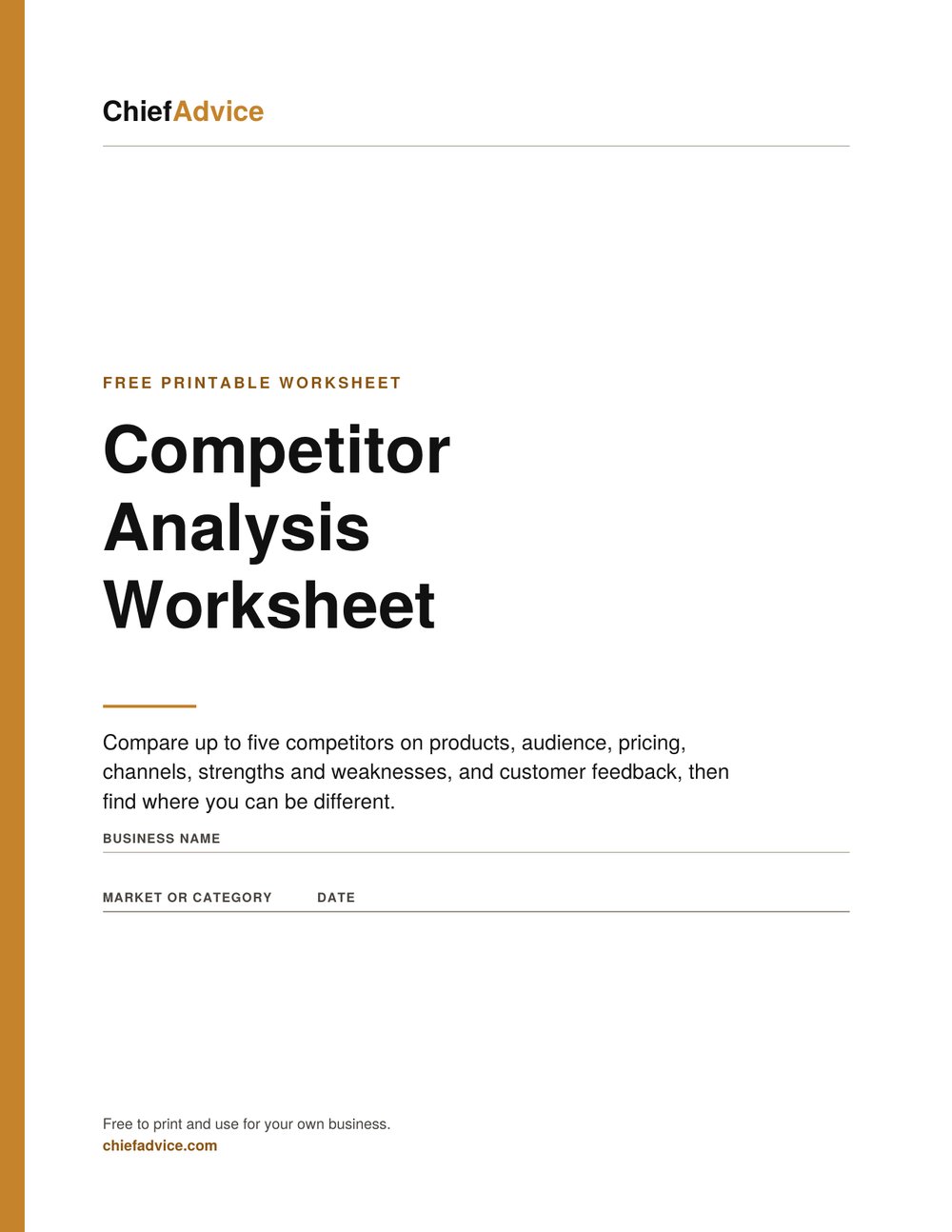
Compare up to five competitors on what they sell, who they serve, how they price and where they market. Then read what customers say about them, and find the places where you can be clearly different.
PDF · 11 pages · US Letter · 16 KB · free, no email or signup
Who this is for
This worksheet is for founders and small business owners who want a clear view of their market before they launch, change their prices, write a new message or plan a campaign. It is also useful when you feel that everyone in your category sounds the same and you want to find a way to stand apart.
It uses only public information, so you can complete it without any special tools.
What is inside
- A quick-start page and a checklist of public places to look
- Competitor overview: type, size or reach, how long operating, first impression
- Products and services compared side by side
- Target audience: who each competitor seems to serve and the tone they use
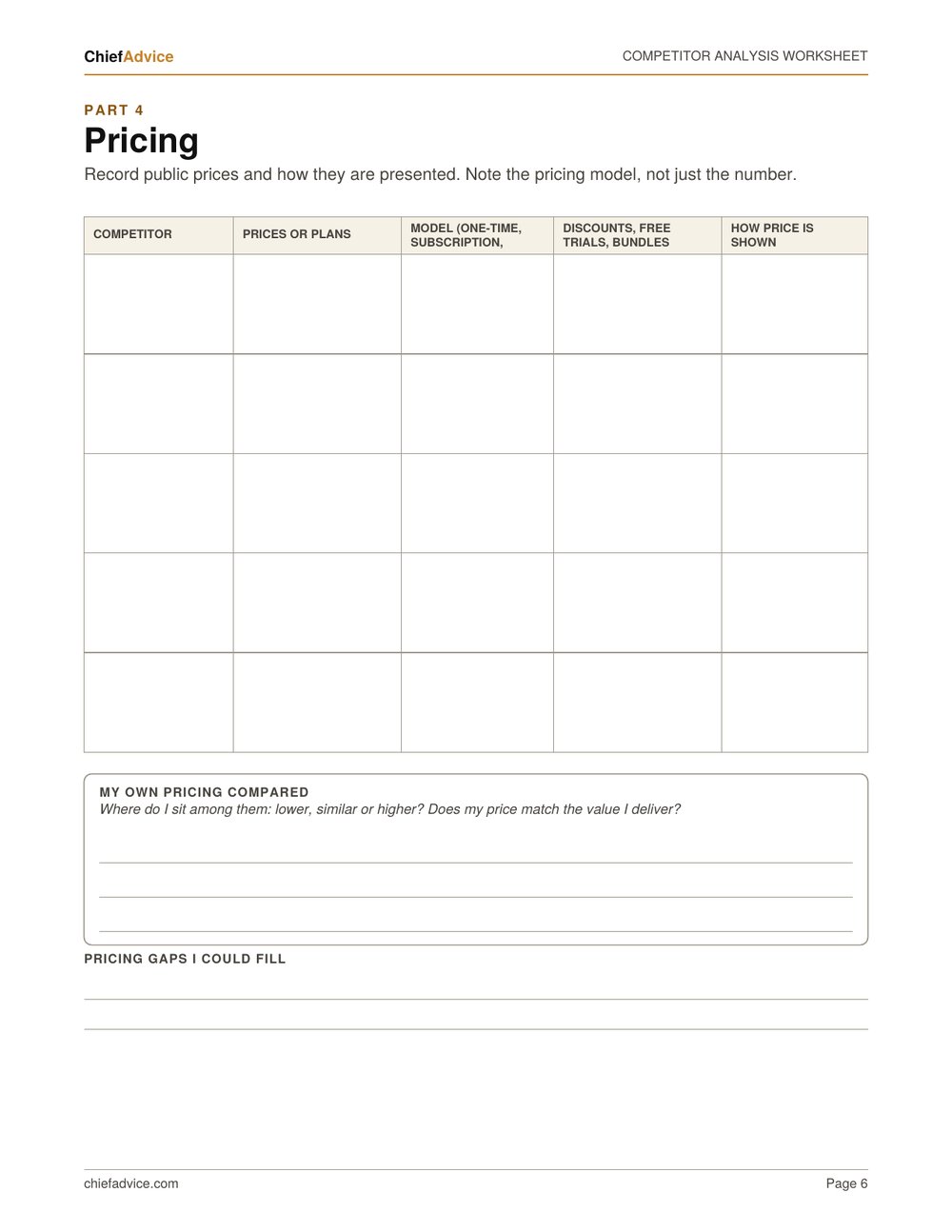
- Pricing: prices, model, discounts and how price is shown
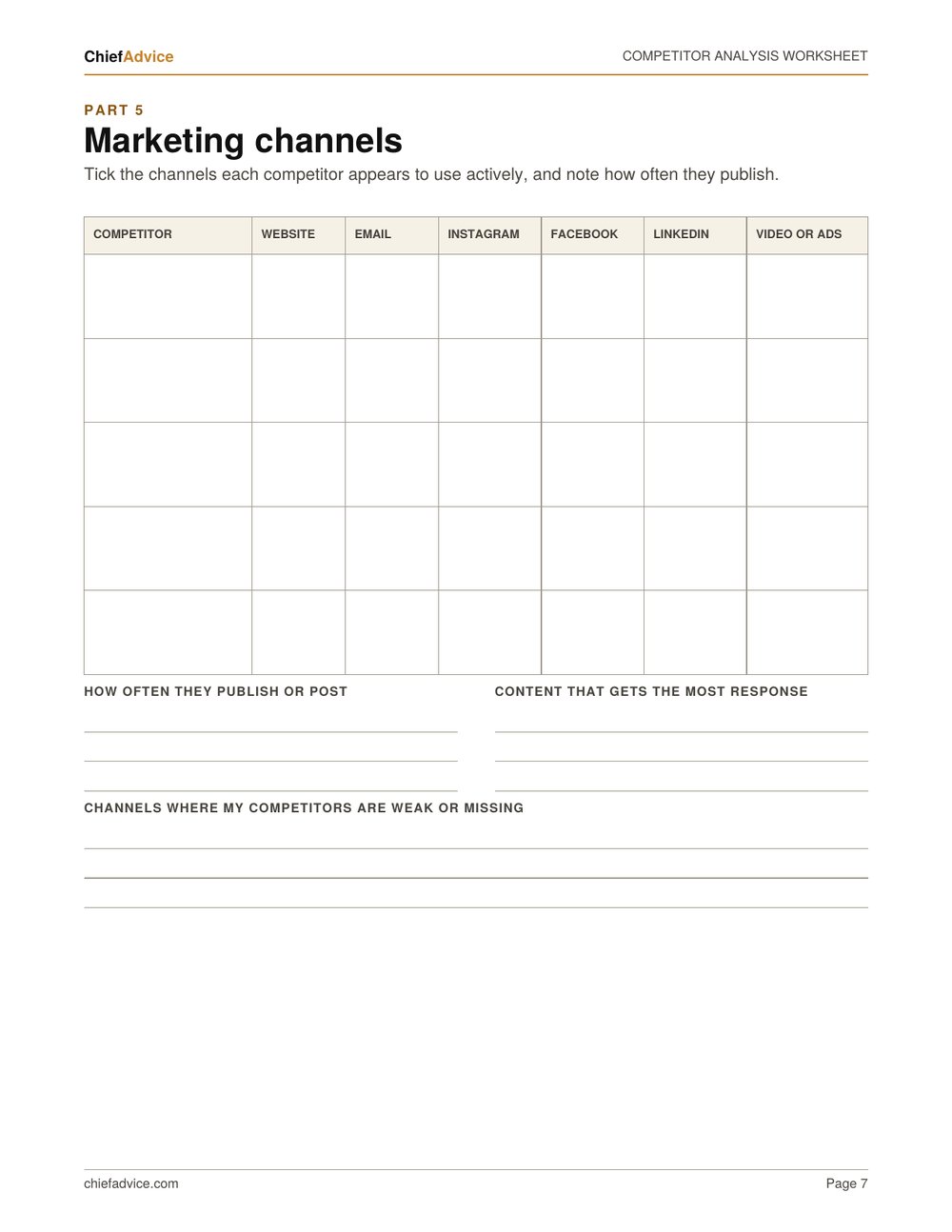
- Marketing channels: which channels each competitor uses, and how often
- Strengths and weaknesses for each competitor
- Customer feedback observations from public reviews
- Differentiation opportunities and an "only we" statement
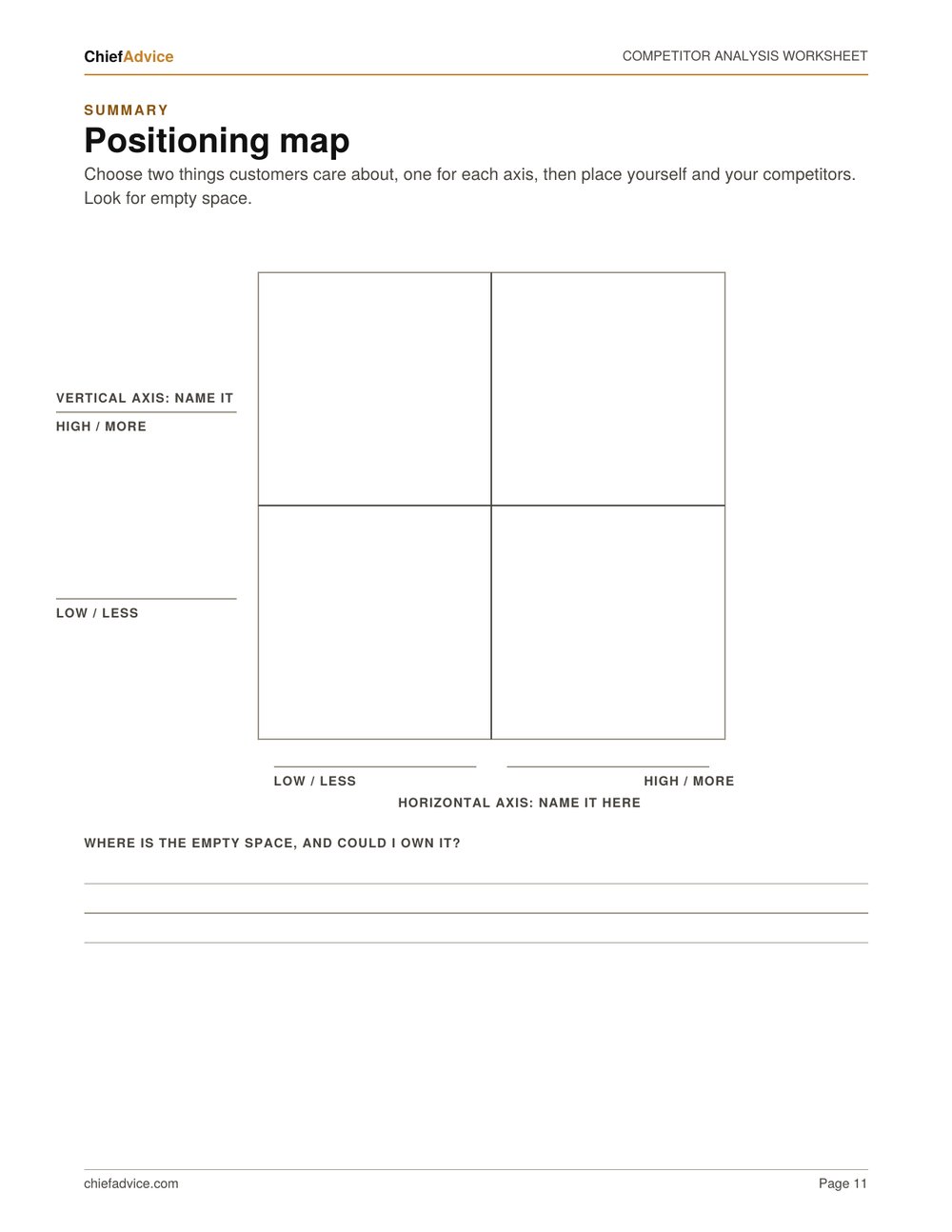
- A positioning map to see where the empty space is
A look at the pages
How to use it
Plan about two to three hours spread over a few sittings. The first competitor takes longest, and later ones go faster.
- Choose three to five competitors. Include direct competitors, indirect ones, and the alternatives customers use instead of buying.
- Collect facts first. Fill in the products, audience, pricing and channels pages from what you can see publicly. Leave blanks rather than guessing.
- Read customer feedback. Look for patterns across several reviews, not single opinions, and write down the words customers use.
- Weigh strengths and weaknesses. Be fair: note what each competitor does well, because your customers will notice it too.
- Find your opening. Complete the differentiation page and the positioning map, then choose three differences to test in your marketing.
Printing tips
The planner is designed for US Letter paper with generous margins. On A4 paper, choose "Fit to page" in the print dialog and the layout will scale cleanly. Backgrounds are kept white and colors are light, so it prints well in black and white and uses very little ink. Print only the pages you need, and reprint any page you want to redo.
Who counts as a competitor?
Think beyond the business that looks exactly like yours. A direct competitor sells a similar thing to a similar customer. An indirect competitor solves the same problem in a different way. And the most common alternative is often doing nothing or doing it themselves. Listing all three types gives a truer picture of what you are really up against. Our article on why competitors can be your best friends explains how to learn from them.
Using public information responsibly
Stay with information that anyone can see: websites, price lists, social profiles, public reviews and published content. Do not misrepresent yourself to get information, and do not copy what you find. The aim is to understand the market, not to imitate it. Standing out usually comes from being different in a way customers care about, which is the subject of being different, not better.
Ready to put your difference into words? The free Brand Strategy Workbook has pages for positioning, your value proposition and competitor differentiation.
Related tools and reading
Frequently asked questions
Is the worksheet really free?
Yes. There is no payment, email signup or account. Download the PDF and print it. It is free to print and use for your own business. If you would like to share it, please link to this page.
How many competitors should I include?
Three to five is enough for most businesses. More than that tends to produce notes you never use. Choose a mix of direct and indirect competitors.
What if I do not seem to have competitors?
Almost every business has alternatives. Think about what customers do today to solve the problem: another product, a different approach, or doing it themselves.
How often should I update it?
Review it at least once a year, and again before a launch, a price change or a major campaign. Markets change, and an old worksheet can mislead you.