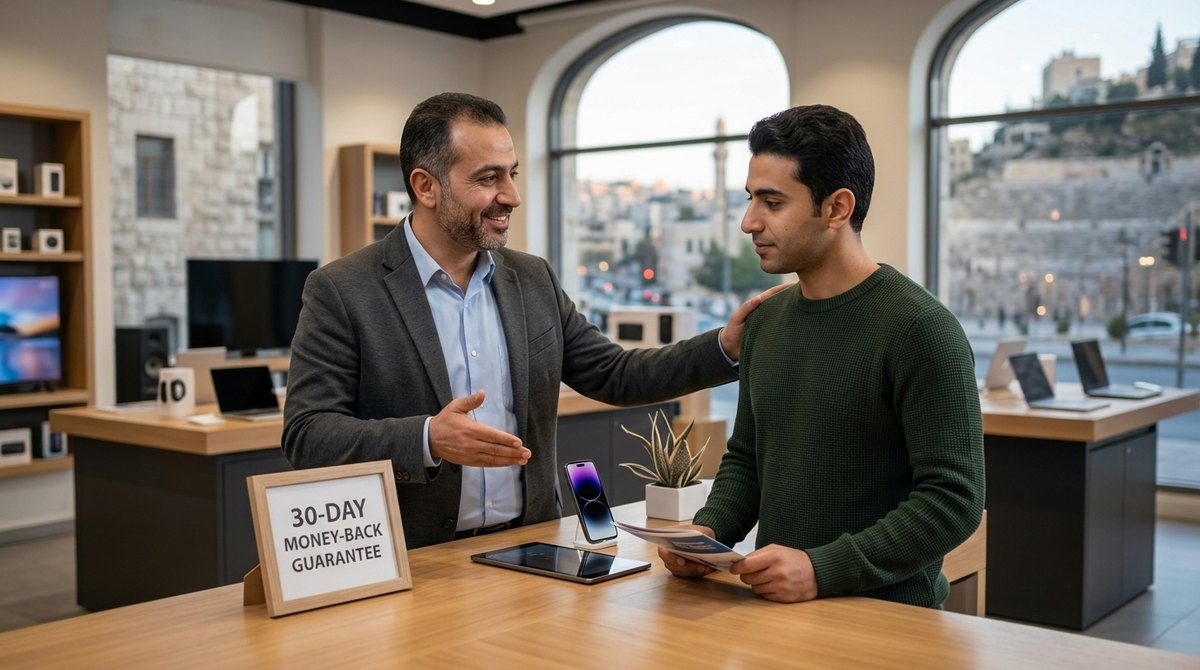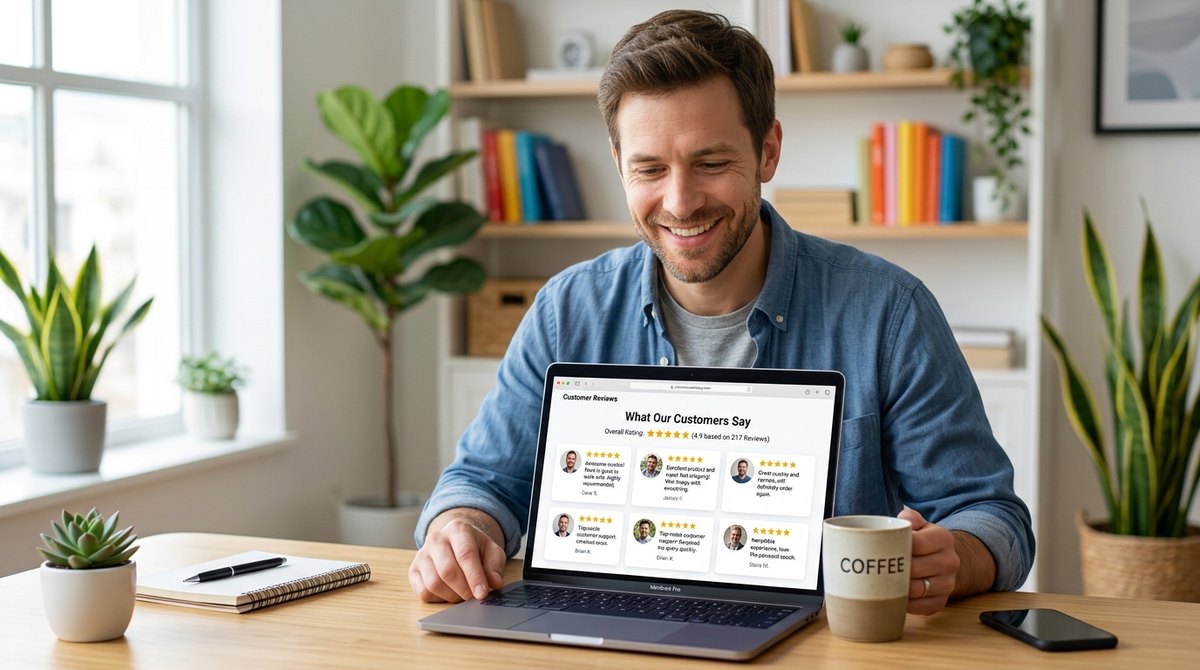
Picture two websites selling the same service. The first says, "We're the leading provider of high-quality solutions." The second shows a photo of a real customer named Tom with a short quote: "They rebuilt our booking system in a week. Our no-shows dropped by half."
Which one do you believe?
That's the power of social proof. A real voice from a real customer is worth more than any polished sales pitch. We've explained why people trust what others already love. This guide is about the practical part most businesses skip: actually collecting that proof, and using it well.
- Customers trust other customers more than they trust your marketing.
- Research suggests even a handful of reviews can sharply increase purchase likelihood.
- Ask at the right moment, make it easy and follow up once.
- Fake or misleading reviews damage trust and, in the U.S., can now bring heavy fines.
Proof Is the New Currency
Every business claims to be great. Customers know that, so they look for evidence from people who have no reason to exaggerate: other customers.
Think of social proof as a kind of currency. Each genuine review, testimonial or case study is a deposit of trust. The more you collect, the easier it becomes for the next person to say yes.
What you say about yourself is advertising. What customers say about you is proof.
What the Numbers Say
Researchers at Northwestern University's Spiegel Research Center studied how reviews affect sales. They found that a product with five reviews was 270% more likely to be purchased than a product with none, and that the effect was even stronger for higher-priced items.
Two more findings are worth knowing:
The first few reviews matter most
The biggest jump comes from going from zero to a handful of reviews. You don't need thousands to start seeing results.
Perfect isn't best
Purchase likelihood tended to peak for ratings between about 4.0 and 4.7 stars. A perfect 5.0 can look too good to be true. A few honest, less-than-perfect reviews make the rest more believable.
When and How to Ask for Reviews
Most happy customers would gladly leave a review. They just don't think of it. Timing and ease make all the difference.
- Ask at the high point. Right after a successful delivery, a finished project or a compliment from the customer.
- Make it one click. Send a direct link to your review page, whether that's Google, Trustpilot or your own site.
- Ask a specific question. "What problem did we help you solve?" gets more useful answers than "Please leave a review."
- Follow up once. A single friendly reminder a few days later is fine. More than that feels pushy.
Turn Happy Customers Into Case Studies
Reviews are quick. Case studies go deeper and are especially powerful for services and higher-priced products. A simple case study follows four steps:
1. The problem
What was the customer struggling with before they found you?
2. Why they chose you
What made them pick your business over the alternatives?
3. What you did
Explain the solution in plain language, without jargon.
4. The result
Use numbers if you can: time saved, sales gained, costs cut. Add a short quote in the customer's own words.
Always get the customer's permission before publishing, and let them review the final version. Most people are happy to be featured, especially when it gives their own business a little publicity.
Where to Show Your Proof
- Next to your buy or contact button, where doubt is highest.
- On your homepage, with two or three of your strongest quotes.
- On product and service pages, matching each review to the right offer.
- In emails and proposals, where a relevant case study can tip a decision.
- On social media, turning a great review into a simple quote graphic.
Real names, photos and details make proof far more believable than "John D., satisfied customer."
Keep It Real: The Rules That Protect Your Reputation
Fake proof is tempting and dangerous. In the United States, a Federal Trade Commission rule that took effect in October 2024 bans fake reviews and testimonials, including AI-generated ones, as well as buying positive reviews and hiding negative ones. Violations can bring large fines per violation.
Beyond the law, customers are good at spotting fake praise. One discovered fake review can undo years of trust. So:
- Only use real reviews from real customers.
- Don't pay or reward people for positive reviews specifically.
- Reply to negative reviews politely and helpfully. It shows you care.
- Clearly mark reviews from employees or partners, if you ever use them.
Conclusion: Start Collecting Today
Your best salespeople may be customers you've already served. Their words just need to be collected and put where future customers can see them.
This week, send a short review request to your ten happiest recent customers. Every honest review you collect is trust you can spend again and again.
Frequently Asked Questions
What is social proof in marketing?
It's evidence from other people, such as reviews, testimonials and case studies, that shows a product or service is trusted and worth buying.
How many reviews do I need?
Research from the Spiegel Research Center suggests even five reviews can sharply increase purchase likelihood compared with none.
When is the best time to ask for a review?
Right after a positive moment, such as a successful delivery, a finished project or when a customer compliments you.
Is it legal to buy reviews?
No. In the U.S., an FTC rule that took effect in October 2024 bans fake reviews and buying positive ones, with heavy fines for violations.
Should I show negative reviews?
Yes. A few honest, less-than-perfect reviews with polite replies make your overall rating more believable.