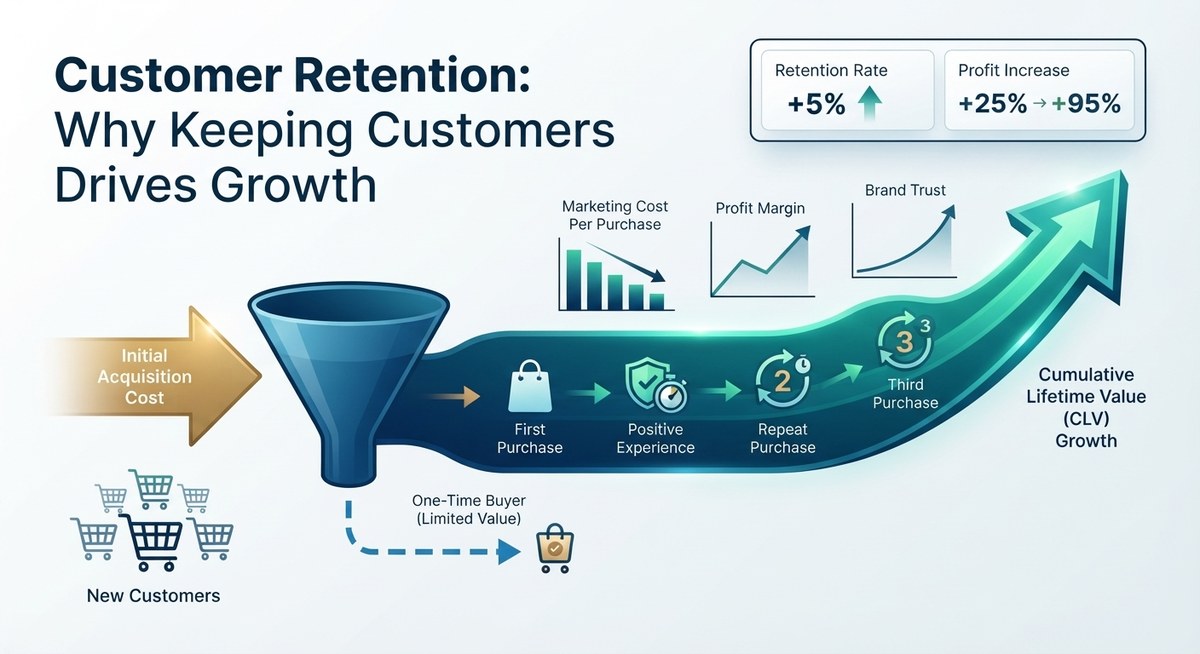
Give customers one small reason to remember an experience that was already dependable.
A tiny moment customers remember
There is a special kind of relief when a company does exactly what it promised. Your package arrives when the tracking said it would. The product works. The invoice matches the quote. Nobody makes you chase an answer. That is not glamorous, but it is the foundation of trust.
Now imagine the same experience with one small surprise: a personal note explaining how to care for the product, a useful sample, or a thoughtful follow-up that answers the question you were about to ask. The extra is not the reason you bought. It is the reason you remember. That is what under-promising and over-delivering should mean: honest expectations followed by excellent execution.
It does not mean deliberately understating what you can do to manipulate a buyer. Nor does it mean giving away so much that the business becomes unsustainable. The best surprise is relevant, useful, and affordable enough to repeat.
Start with a promise you can confidently keep
Over-delivery fails when the basic promise is weak. A free sticker does not compensate for a late shipment. An extra consultation call cannot erase a service that never solved the client’s problem. Before you invest in pleasant surprises, write down the core expectations a reasonable customer has.
For a product company that might be accurate photos, transparent shipping costs, reliable packing, and clear returns. For a consultant it might be a sensible scope, a meeting agenda, on-time deliverables, and direct answers. If those things are inconsistent, the first job is to make them predictable.
The point is well reflected in Shopify’s discussion of customer expectations: expectations include what a customer anticipates from a brand from discovery through purchase and support. A thoughtful surprise is powerful only when it sits on top of that foundation.
A real example: the thank-you that feels personal
In its guide to customer delight, Shopify’s customer delight examples describes the role of handwritten notes and personal customer service, and includes the example of a founder using a personal touch in the first email customers receive. Neither idea depends on a national advertising budget. They depend on whether the business actually knows who it is serving.
A small stationery business could slip a short handwritten note into an order for a planner, perhaps with a suggestion for how to use the first page. A local repair shop could send a photo showing what was fixed and an easy maintenance tip. In both cases the customer gets more confidence, not merely more merchandise.
That distinction is important. Customers do not need endless free gifts. They need proof that someone cared enough to notice their situation. When an extra creates real value, it often becomes the story the customer tells a friend.
Four kinds of extra value worth testing
Instead of copying expensive unboxing campaigns, design small extras around the uncertainty your buyer feels. Choose one, test it with a handful of orders, and ask whether customers actually valued it.
1. Make the next step easier
Include a one-page setup checklist or a clear start-here message that saves the buyer time.
2. Save the customer an unnecessary question
Proactively explain delivery, usage, upkeep, or what will happen after the service.
3. Recognize the person
Use the product they bought or the problem they named to make the follow-up relevant.
4. Offer a meaningful small extra
A sample, an extra template, or a personal recommendation can feel generous without damaging margins.
The right choice depends on context. A downloadable template could delight a service client. A useful care guide could matter more to someone buying handmade leather goods than an unrelated discount code.
When “extra” becomes a hidden business cost
Not every happy customer becomes profitable. If you promise three hours and regularly give away five, you are teaching customers that your scope is meaningless. If an employee has to spend fifteen minutes hand-writing a note for a low-margin order, the economics may no longer work. A sustainable approach protects the business while creating loyalty.
Set a modest allowance for extras and review it against repeat orders, satisfaction, complaints, and gross margin. A rule as simple as “one helpful follow-up and a printed care card per order” might be more valuable than a different gift every week. If an extra is consistently expected, it may belong in the advertised offer instead.
The best surprise does not make the promise smaller. It makes the customer's experience better.
To protect profitability, revisit our article on why net income matters more than vanity revenue.
What to measure besides compliments
Compliments are useful, but they are not a full measurement strategy. Track whether people return, refer someone, or contact support less often after you improve the experience. If you offer a free tip with every order, ask one question in the follow-up email: “Was this useful?” That gives you evidence instead of guesswork.
Be careful with attribution. A customer returning next month may have done so without your note. Compare similar periods or groups where practical; use customer feedback as a supporting signal rather than claiming a proven revenue lift from a handful of anecdotes. Shopify’s customer-service guidance suggests customer satisfaction measures and operational feedback as ways to learn where expectations are being met.
For a simple system, use the Monthly Business Review planner alongside our KPI guide. Record what you changed, what it cost, and what customers reported.
A seven-day loyalty experiment
If your business is small, you can learn a lot without launching a new loyalty program. Over one week, identify one recurring customer worry, write an answer that is easy to understand, and deliver it before the customer asks. This might be a shipping estimate shown earlier, a quick setup video, or an honest “here is what to expect” email.
Day 1: listen
Read the last ten messages and find the question customers repeat.
Days 2–3: improve
Create one thoughtful extra or remove one frustrating step.
Days 4–6: deliver
Use the improved experience consistently rather than selectively for influential customers.
Day 7: learn
Record feedback and cost, then decide whether the change deserves to become standard.
Keep the experiment fair. You are not rewarding only customers who threaten a bad review or post publicly. You are improving the service for ordinary people who trusted you enough to buy. A business built on reliable care becomes easier to recommend—and a lot harder to replace.
A service recovery can be the most memorable extra
The easiest place to surprise a customer is not always after a perfect delivery. Sometimes it is the moment something goes wrong. A wrong item, late response, or confusing instruction is a chance to show that the business takes responsibility seriously. Explain the mistake clearly, offer an appropriate remedy, and tell the customer when the problem will be resolved. Then follow through on the promised timeline.
Consider a print shop that delivers the wrong paper finish. A weak response blames the supplier and asks the customer to fill out another form. A stronger one confirms the error, arranges the correction, and sends an updated proof proactively. If the shop can afford an expedited replacement, that may be a suitable gesture; if not, honest timing is still better than vague optimism. This is an illustrative scenario, not an audited case.
The key is consistency. An unexpected act of care during a failure can matter more than a small freebie during a flawless order because it shows what your promises mean under pressure. But do not create an incentive to complain publicly in order to receive special treatment. Design a fair recovery policy that employees can apply without begging managers for permission.
Write expectations in the language customers use
Many promise problems begin with vague phrases such as “fast shipping,” “premium support,” or “results guaranteed.” Those statements sound positive but leave room for very different interpretations. Replace them with specific, realistic language: which regions you ship to, when tracking is sent, what support hours cover, what is included in a service, and what depends on the customer.
It also helps to record the questions buyers ask before placing an order. If several people ask whether installation is included, that detail belongs on the product page. If clients repeatedly misunderstand the number of revisions, rewrite the proposal. That is a form of over-delivery before the sale: you prevent surprises that would otherwise feel unpleasant.
Do not promise outcomes you cannot control. A consultant can commit to a clear process, useful deliverables, and honest communication, but should not guarantee a client will double revenue. The more expensive the decision, the more important that distinction becomes. A reliable business does not make the boldest promise. It makes the most useful promise it can keep.
A promise you can afford to repeat
Under-promise and over-deliver works when both halves are healthy: the promise is honest and specific, and the delivery is reliably excellent. The extra should feel like an extension of care, not a distracting trick.
If you remember just one thing, make this your standard: do the expected thing exceptionally well, then add one thoughtful step that helps the customer. That is how small moments become stories, and stories become loyalty. You do not need the loudest brand in the market to earn a fan. You need a customer who can tell someone exactly why buying from you felt better.
Frequently Asked Questions
Does under-promising mean hiding what I can deliver?
No. Be transparent and realistic. Deliberately misleading customers about quality, timing, or capability undermines trust.
What is a low-cost example of over-delivery?
A useful care guide, personal follow-up, or clear onboarding checklist can add value without an expensive free gift.
How do I know whether a surprise is worthwhile?
Monitor feedback, repeat purchases, complaints, the time required, and margin impact. Avoid assuming a compliment proves extra revenue.
Should every order include a surprise?
Aim for a repeatable standard of care. Extras can be selective based on relevance, but core service should be consistently excellent.