Picture yourself shopping for a watch. The first one the salesperson shows you costs $2,000. Your eyebrows go up. Then he shows you a beautiful model for $400, and suddenly it feels almost reasonable.
Nothing about the $400 watch changed. What changed was the number you saw first.
That's price anchoring, one of the most powerful and least understood ideas in pricing. Used well, it helps customers see the real value of your main offer and makes saying yes feel easy.
- People rarely judge prices on their own. They compare them with the first or nearby numbers they see.
- A higher-priced option can make your core offer look like great value.
- Real examples include The Economist's subscription test and Apple's iPad launch.
- Anchors must be real offers. Fake "original prices" damage trust and can break consumer laws.
We Judge Prices by Comparison
Most of us don't know what most things should cost. Is $49 a fair price for a design template? Is $1,500 fair for a website? Without a reference point, we look around for one, and we grab the closest number we can find.
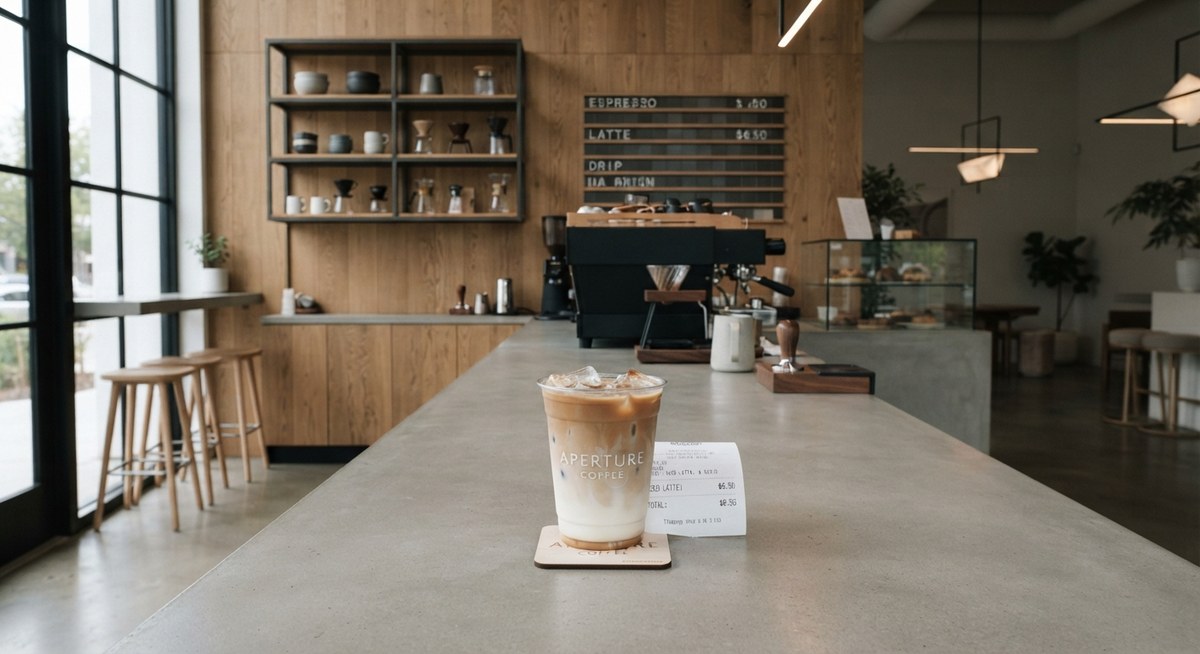
That's why the same product can feel cheap in one setting and expensive in another. A $5 coffee feels pricey next to a $1 one, but like a small treat next to a $9 sandwich.
You see anchoring everywhere once you start looking. Cinemas sell popcorn in small, medium and large sizes, and the large often costs only a little more than the medium, so it feels like the obvious upgrade. Phone plans, software subscriptions and gym memberships all line up their options in a way that nudges you toward one choice.
Customers don't buy prices. They buy comparisons.
What Is Price Anchoring?
Anchoring is a mental shortcut first described by psychologists Amos Tversky and Daniel Kahneman in the 1970s. In one famous experiment, people spun a wheel that landed on a random number, then estimated what percentage of African countries were members of the United Nations. Those who saw a high number on the wheel gave noticeably higher estimates than those who saw a low one, even though the wheel had nothing to do with the question.
If a random number can pull our judgments, a carefully placed price can too. In pricing, the anchor is the first or most visible price a customer sees. Everything after it gets judged against that number.
Real-World Examples
The Economist subscription test
In his book Predictably Irrational, behavioral economist Dan Ariely describes an offer once shown by The Economist: a web-only subscription for $59, a print-only subscription for $125 and print plus web for $125. When Ariely tested it with MIT students, 84% chose print plus web and 16% chose web only. Nobody chose print only.
Then he removed the print-only option that nobody wanted. With only two choices left, 68% chose web only and just 32% chose the bundle. The "useless" option had been doing an important job: it made the bundle look like an obvious bargain.
Apple's iPad launch
When Steve Jobs introduced the first iPad in January 2010, he reminded the audience that pundits expected a price of around $999. Then he announced it would start at $499. Against that expected number, $499 felt like a pleasant surprise rather than a big expense. Apple has used carefully ordered prices and product tiers ever since.
The bread maker that sold another bread maker
A story often shared by persuasion researchers involves the kitchen retailer Williams-Sonoma. When it added a larger, more expensive bread maker next to its existing model, sales of the original, cheaper machine reportedly almost doubled. Next to the pricier option, the original suddenly looked like the sensible choice.
How to Anchor Your Core Offer
You don't need a famous brand to use anchoring. Here's how small businesses can apply it:
1. Offer three tiers
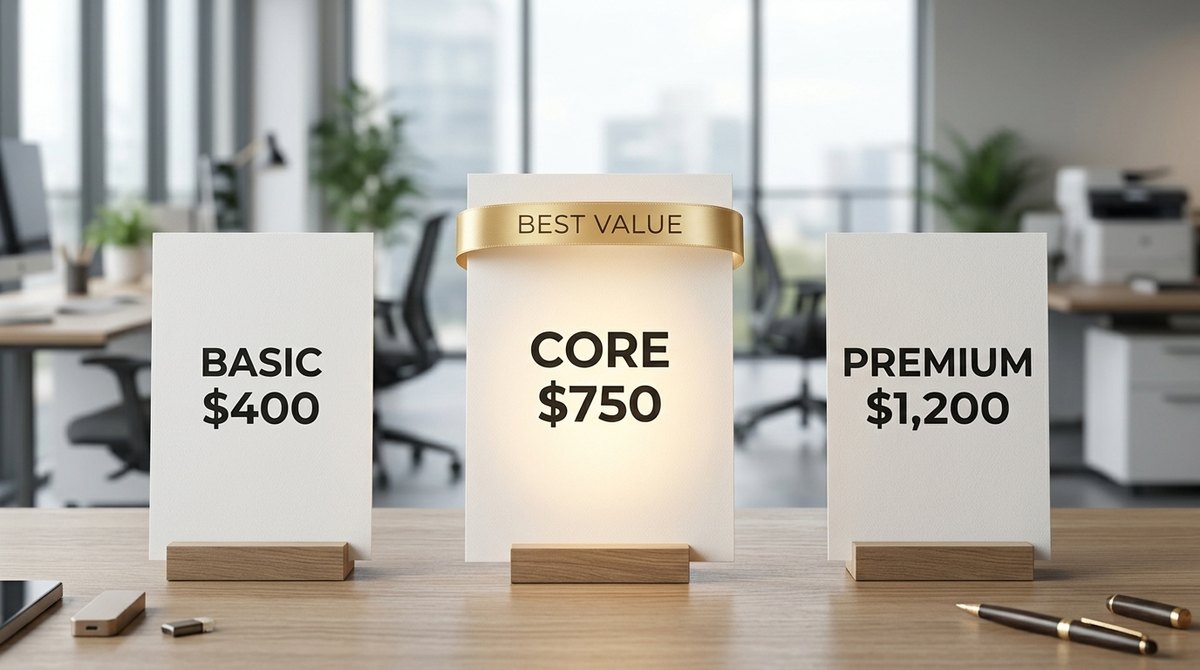
Create a basic, a core and a premium option. The premium tier sets a high anchor, and your core offer, the one you want most people to choose, sits comfortably in the middle.
2. Show the premium option first
On your pricing page or in a sales conversation, start with the most complete package. Everything after it feels more affordable by comparison.
3. Make the core offer the best value
Give the middle option most of what the premium tier offers at a noticeably lower price, and label it clearly as "Most popular" or "Best value."
4. Show the value, not just the price
Compare your price with the cost of the problem it solves or the alternative. For example: "One hire costs $4,000 a month. Our service costs $600."
Core, $750 (Most popular): website, logo and copywriting
Basic, $400: one-page website
In this example, many buyers who would hesitate at $750 on its own see it as the smart middle choice: much more than the basic package, without the premium price.
Use Anchoring Honestly
Anchoring works because people trust the numbers you show them. Break that trust and the technique backfires.
- Make every option real. Your premium tier should be something you'd genuinely deliver and that some customers will buy.
- Never invent "original prices." Showing a fake "was $199, now $49" price is misleading, and in many countries it can break consumer protection laws.
- Keep the value genuine. Anchoring can make a fair price feel fair. It can't make a bad product good.
Conclusion: Give Customers a Better Comparison
Your customers will compare your price with something. If you don't give them a reference point, they'll find their own, often a cheaper competitor or nothing at all.
So give them a better comparison. Put a real premium option next to your core offer, show the value clearly and let the numbers tell an honest story. When the comparison is clear, your core offer stops feeling like a cost and starts feeling like a smart decision.
Frequently Asked Questions
What is price anchoring?
It's the tendency to judge a price by comparing it with the first or most visible price we see. A higher anchor makes later prices feel more reasonable.
What is a decoy price?
It's an option designed mainly to make another option look better, like a print-only subscription priced the same as print plus web.
Is price anchoring ethical?
Yes, when every option is real and the prices are honest. Inventing fake original prices or discounts is misleading and can be illegal.
How many pricing tiers should I offer?
Three is a common choice: basic, core and premium. It gives customers a clear comparison without overwhelming them.
Should I show the most expensive option first?
Often, yes. Showing a complete premium package first makes your core offer feel like better value by comparison.