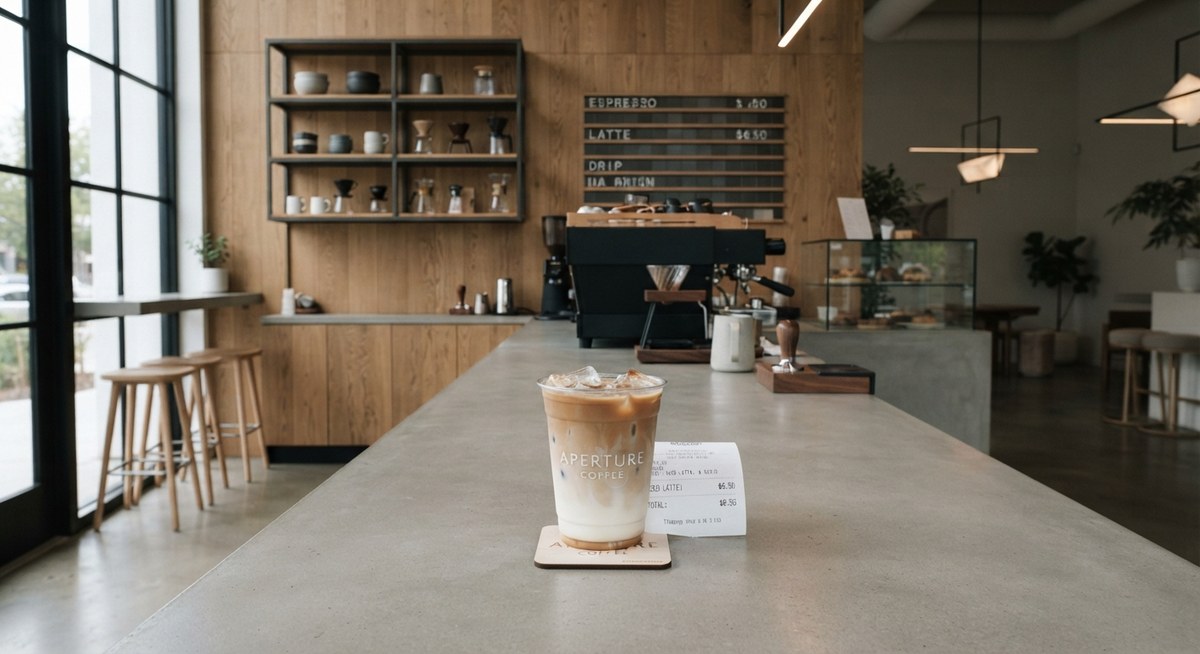
Imagine walking down a bustling high street on a scorching summer afternoon. You step into a modern, minimalist cafe and order a simple iced latte. When the barista hands you the paper cup, you look at the receipt: $7.50.
Now, think about your reaction. Do you throw your hands up in anger, demand to speak with the manager, or accuse them of highway robbery? Of course not. You happily pay the price, snap a photo of the aesthetic cup for your social media, and take a sip, feeling completely satisfied.
Later that same day, you drive to a local convenience store to pick up a gallon of milk. Next to the register, you notice a generic brand of bottled iced coffee sitting in a metal cooler. It costs $2.00. Yet, you hesitate. You look at the slightly faded label, wonder if it tastes synthetic, and decide to leave it on the shelf.
Think about the sheer paradox of that moment: you willingly paid nearly four times more for coffee at the cafe because of the brand experience, while you rejected a much cheaper option down the street because it lacked trust and prestige.
In the modern marketplace, price is never just a mathematical calculation of raw materials and labor. It is a direct reflection of brand equity.
The golden rule of elite brand positioning is simple: premium pricing — a strong brand allows you to charge more. Let's explore why discounting is a race to the bottom, how human psychology perceives price as a proxy for quality, and how building a powerful brand gives you the ultimate pricing power.
- When two products feel identical, price becomes the customer's only decision metric — and both companies race their margins to zero.
- The Veblen Effect means demand for some products rises as price rises, because the price itself is part of the value, the way it is with Rolex.
- Human brains use price as a quality shortcut — an unusually cheap price can trigger suspicion instead of excitement.
- Premium pricing is earned through the whole sensory experience, scarcity, and validation — not just typed into a price field overnight.
The Commodity Trap: Why Discounting Destroys Value
To understand why a strong brand unlocks pricing power, you have to look at what happens when a business competes on price rather than identity.
When a company fails to build a distinct brand, it becomes a commodity. In the eyes of the consumer, a commodity has no unique personality or emotional connection. Whether you buy Brand A or Brand B, they are functionally identical.
When two products are identical, the consumer's only logical decision-making metric is cost.
This traps companies in a brutal, exhausting cycle known as the "Race to the Bottom":
- Company A lowers its price by 10% to steal market share.
- Company B retaliates by slashing its prices by 20% and offering free shipping.
- Both companies squeeze their profit margins, cut corners on product quality or customer support just to stay afloat, and eventually run out of cash.
Discounting tells the market: "We aren't confident in our own value, so we are hoping a lower price will convince you to take a chance on us." It breeds skepticism rather than loyalty.
The Luxury Paradox: Why Higher Prices Build Greater Demand
In classical economics, the Law of Demand states that as the price of a good increases, the demand for that good should decrease.
Yet, in the real world of branding, that law is frequently shattered by the Veblen Effect — a phenomenon where the demand for a product increases as its price rises, because it becomes a symbol of status, exclusivity, and supreme quality.
Look at the legendary watchmaker Rolex.
If you walk into a Rolex boutique, you are paying thousands — sometimes tens of thousands — of dollars for a stainless steel timepiece. Mechanically speaking, a digital smartwatch or a precision quartz watch made by another manufacturer can tell time with far greater accuracy for a fraction of the cost.
People do not buy a Rolex because they need accurate timekeeping; they buy it because of what the brand represents. The high price tag isn't a barrier to purchase — it is the very feature that creates the value. A cheap Rolex would be a contradiction in terms, destroying the entire psychological appeal of the brand.
When you build a strong, trusted brand, price ceases to be a friction point. Instead, price becomes a badge of honor, a signal of excellence, and a filter that attracts high-value customers who value quality over bargains.
The Psychology of Perceived Value: Price as a Quality Signal
Human brains are lazy by design. When faced with an overwhelming sea of choices, the brain looks for mental shortcuts (heuristics) to make fast decisions.
One of the most powerful mental shortcuts we use is equating price with quality.
Imagine you are looking online for a marketing consultant to help grow your business. You find two professionals with identical resumes. Consultant A charges $100 an hour. Consultant B charges $500 an hour.
Without knowing anything else, what is your immediate psychological assumption? Most people instinctively assume Consultant B must be significantly smarter, more experienced, and more effective. If Consultant B only charged $100, your brain would immediately trigger suspicion: "What's wrong with them? Why are they so cheap?"
When you underprice your products or services, you aren't doing your customers a favor; you are accidentally signaling that your work lacks authority. A strong brand gives you the courage to charge what you are truly worth, transforming your price tag from a point of resistance into a stamp of elite credibility.
The Blueprint: How to Earn the Right to Charge More
You cannot simply wake up tomorrow morning, double your prices, and expect customers to line up if your brand hasn't earned that positioning. Premium pricing is the reward for brand equity. Here is how to build that equity.
Step 1: Upgrade the Entire Sensory Experience
If you want to charge luxury prices, every touchpoint of your business must match that ambition. Look at your website design, your packaging, your typography, your email response times, and your customer onboarding. Eliminate anything that looks cheap, cluttered, or amateurish.
Step 2: Shift from Features to Identity
Commodity brands sell features and compete on specs. Premium brands sell transformation and status. Stop justifying your price based on how many hours you worked or how much material you used. Justify your price based on the massive, life-changing outcome you deliver to the customer.
Step 3: Cultivate Scarcity and Exclusivity
Mass-market brands want to sell to everybody. Premium brands are comfortable saying no. By limiting availability, highlighting artisan craftsmanship, or working with a selective roster of clients, you create natural scarcity that drives up perceived value.
Step 4: Deliver Overwhelming Post-Purchase Validation
The moment a customer pays a premium price for your product, a brief moment of anxiety sets in: "Did I make the right choice?" Crush that anxiety immediately by delivering an extraordinary unboxing experience, lightning-fast support, or unexpected bonuses. When the reality of your product far exceeds the premium price they paid, you turn a buyer into a lifelong advocate.
Conclusion: Stop Competing on Cheapness
In a global marketplace overflowing with noise and imitators, trying to win by being the cheapest is a trap that leads to exhaustion and bankruptcy.
You don't need more discounts to win customers. You need a stronger brand, a clearer identity, and the unshakable confidence to charge what you are worth.
Stop racing to the bottom. Build a brand that commands respect, embrace premium pricing, and let the market reward you for the true value you bring.
Frequently Asked Questions
Why does competing on price usually hurt a business long-term?
When products feel interchangeable, price becomes the only decision factor, triggering a 'race to the bottom' where competitors keep undercutting each other until profit margins collapse and quality gets cut to survive.
What is the Veblen Effect?
It's an economic phenomenon where demand for a product rises as its price rises, because the high price itself signals status and exclusivity — the reason a cheap Rolex would actually destroy the brand's appeal rather than boost sales.
Why does a low price sometimes make people suspicious instead of excited?
Human brains use price as a mental shortcut for quality. If two providers seem identical but one charges far less, people often assume something is wrong with the cheaper option rather than seeing it as a good deal.
Can I just raise my prices overnight to seem more premium?
Not without the brand equity to back it up. Premium pricing has to be earned by upgrading the entire customer experience — website, packaging, response times, and positioning — not just typed into a price field.
What is post-purchase validation and why does it matter for premium pricing?
It's the reassurance you give a customer right after they pay a high price, when a moment of doubt naturally sets in. Delivering an experience that exceeds their expectations turns that anxiety into loyalty and advocacy.