In June 1979, McDonald's launched something simple across the United States: a burger, fries, a drink, a cookie treat and a small toy, all in a colorful box. They called it the Happy Meal.
None of the food was new. What was new was the package. Parents no longer had to build a kid's order item by item. They just said two words, and their child got a meal and a surprise. According to The Henry Ford museum, the national launch came with a circus wagon theme and toys like rulers and erasers.
Decades later, ordering a "combo" or "meal" is how millions of people buy fast food. That's the power of bundling: combine related products, give them one price and make the decision easy.
- Bundling means selling related products together, usually at a better price than buying each one alone.
- Bundles raise average order value, reduce decision fatigue and help move slower products.
- The best bundles solve a complete problem, like "everything you need to start".
- Price the bundle so the saving is clear, but check your profit on every bundle you create.
- Let customers still buy items on their own. Forced bundles feel like a trap.
The Box That Changed Fast Food
The Happy Meal worked because it understood its customer. A busy parent doesn't want to compare five menu items. They want their child fed and happy, quickly. The bundle answered that need better than any single product could.
That's the real lesson. A bundle isn't just a discount on several items. It's a ready-made solution. When you sell a bundle, you're telling customers, "We've thought about what you need, so you don't have to."
Why Bundles Work
They raise order value
A customer who came for one item leaves with three. Even with a small discount, the total sale is bigger, and the cost of winning that customer stays the same.
They make choosing easier
Too many options can stall a decision. A bundle reduces many small choices to one simple "yes".
They feel like a deal
When people see that the bundle costs less than the items added together, the value is obvious. It's the same principle we explain in our guide to price anchoring.
They introduce new products
Customers who would never buy your new item on its own will try it inside a bundle. If they like it, they'll buy it again later.
Five Types of Bundles
1. The starter kit
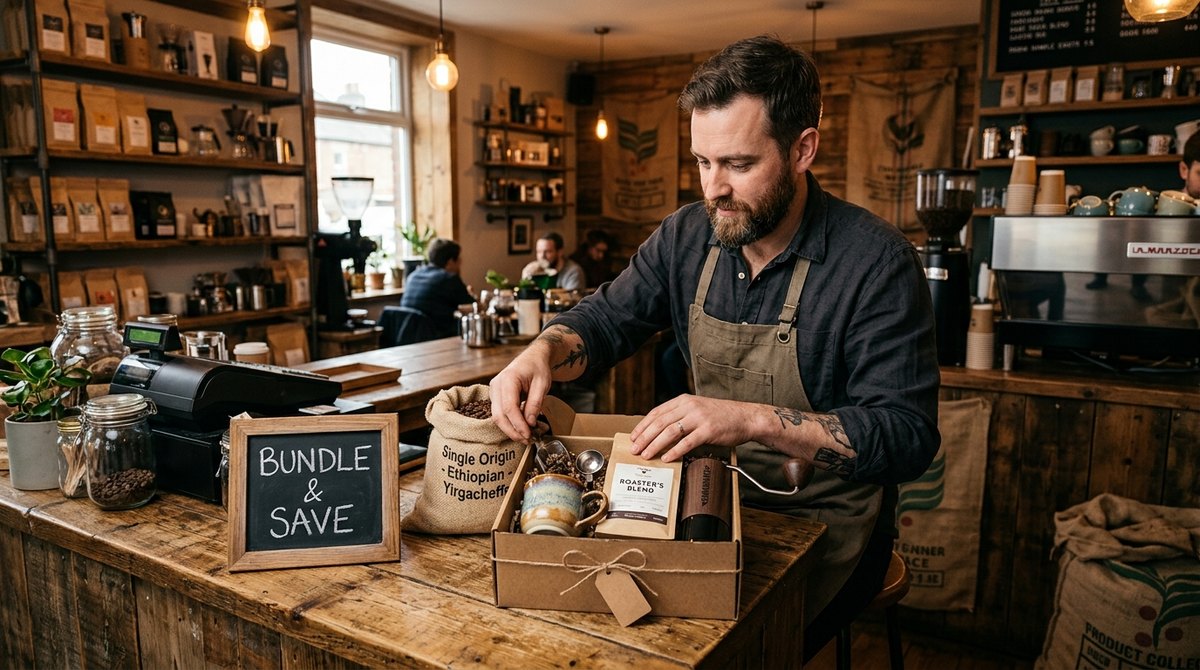
Everything a beginner needs in one box. A coffee shop might sell beans, a hand grinder and a brewing guide as a "home barista kit".
2. The complete routine
Products used in sequence, like cleanser, serum and moisturizer, or shampoo, conditioner and styling cream.
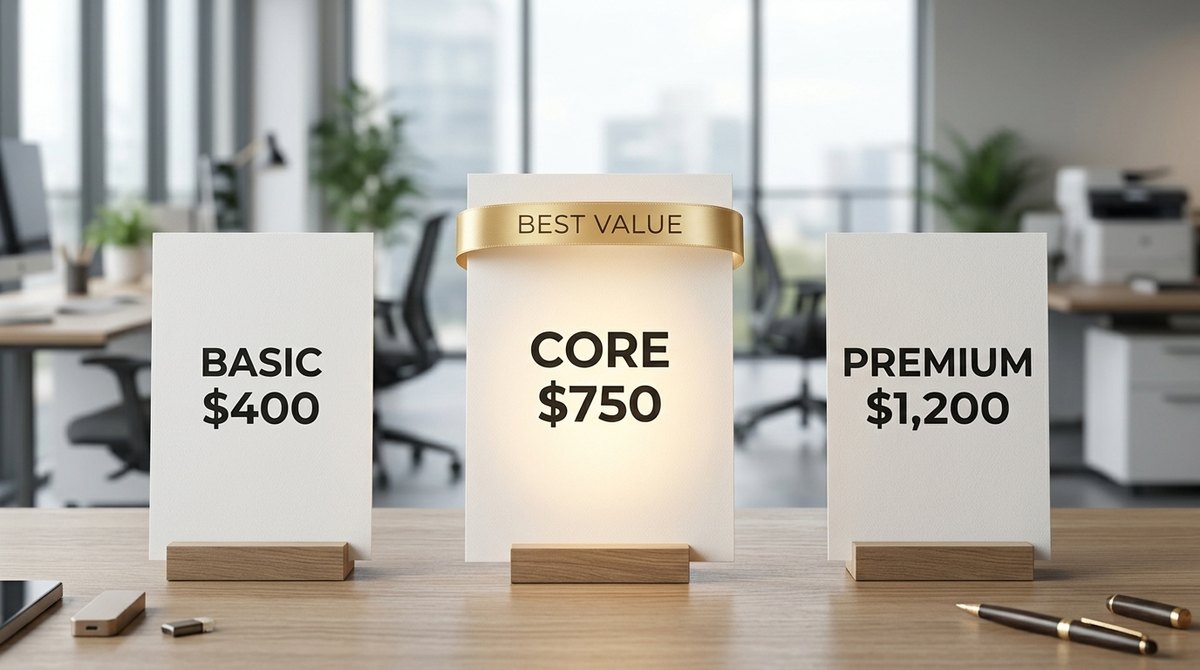
3. Good, better, best packages
Common for services. A web designer might offer a basic site, a site plus copywriting, and a site plus copywriting and monthly support.
4. Build your own
Customers pick any three or five items from a range for a set price. It feels personal and still raises the order value.
5. Gift and seasonal sets
Ready-to-give boxes for holidays and occasions. They save customers time and often justify nicer packaging.
How to Price a Bundle
A bundle has to feel like a good deal to the customer and still be a good deal for you. Start with simple math:
Offer the bundle at $59, a saving of $11, or about 16%.
Now add up your costs for all three items, plus packaging and shipping. If your profit on the bundle is higher than the profit on the single item most people buy, the bundle is working.
Many businesses find that a saving of roughly 10% to 20% feels meaningful without destroying margins, but there's no magic number. Test a couple of price points and watch both sales and profit.
Always show the saving clearly. "Bundle price $59 (worth $70)" is much more persuasive than a price on its own. And make sure the "worth" price is real: it should be what customers would actually pay for the items separately.
Building Your First Bundle
- Look at what people already buy together. Your order history is a goldmine. If many customers buy item A and item B in the same order, you have a natural bundle.
- Name the problem it solves. "Weekend Brunch Box" sells better than "3-item bundle".
- Include one hero product. Build the bundle around your bestseller, then add items that make it more useful.
- Add a slower item, carefully. Bundles can help move stock, but only add products that genuinely fit. Customers notice filler.
- Place it where decisions happen. Show bundles on product pages and at checkout, as we describe in our guide to cross-selling at checkout.
Here's how that can look in practice. Imagine a small skincare shop that notices most first-time buyers order a cleanser, then come back weeks later for a moisturizer. The owner creates a "Simple Daily Routine" set with both products and a travel-size sunscreen, priced slightly below the three items bought separately. New customers now leave with a complete routine on day one, try the sunscreen they might never have picked, and the shop's average first order grows without a single extra ad.
Service businesses can do the same. A photographer might bundle a portrait session, edited images and a printed album. An accountant might bundle bookkeeping, tax filing and a quarterly review call. The principle never changes: put together what customers would need anyway, and make it simple to say yes.
Bundling Mistakes to Avoid
Forcing the bundle
If customers can only buy items in a bundle, those who need just one item feel pushed and may leave. Offer both.
Unrelated products
A phone case bundled with a scented candle doesn't solve any problem. Bundles should make sense at a glance.
Too many bundles
Ten bundles bring back the decision fatigue bundles are meant to remove. Start with two or three.
Forgetting the margin
A bundle that sells well but loses money is a problem, not a success. Check the numbers before and after launch, as we explain in our guide to unit economics.
Conclusion: Sell the Solution, Not the Pieces
The Happy Meal didn't invent new food. It packaged existing food around a real need and made the decision effortless. Your business can do the same at any size.
This week, look at your last 50 orders, find two products that often sell together and create one simple bundle with a clear name and a clear saving. Make the complete solution the easiest thing to buy.
Frequently Asked Questions
What is product bundling?
Selling several related products or services together as one package, usually at a lower price than buying each item separately.
How much discount should a bundle have?
Many businesses use a saving of around 10% to 20%, but test different prices and always check that the bundle's total profit is healthy.
Does bundling increase sales?
It often increases average order value and makes decisions easier, because customers get a complete solution in one purchase.
Should customers still be able to buy items separately?
Yes. Offering both the bundle and individual items avoids frustrating customers who need only one product.
How do I choose which products to bundle?
Look at your order history for items people already buy together, build around a bestseller and add products that make it more useful.