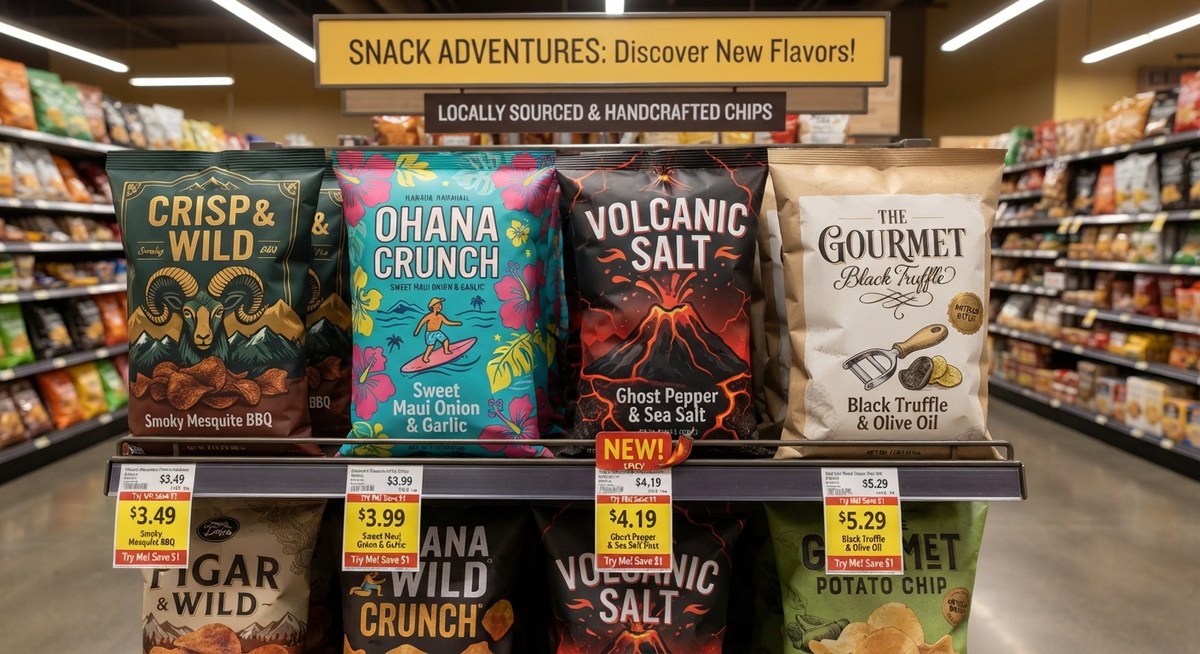
Imagine walking down the snack aisle of your local supermarket. For the last ten years, you have bought the exact same brand of crisp red potato chips. You bought them because your parents bought them, because the red bag felt familiar, and because you never saw any reason to change.
Then, one Tuesday afternoon, you walk down that same aisle and notice something. Your favorite brand is sitting on the shelf at its usual price of $3.50. But directly next to it is a sleek, minimalist new challenger brand on a promotional discount for $2.49 — with a bright neon sticker promising delivery straight to your doorstep in under an hour via a local instant delivery app.
Do you stand in the aisle, cross your arms, and whisper a solemn pledge of allegiance to your childhood potato chip brand? Do you proudly pay the extra dollar out of pure emotional reverence?
Of course not. You toss the discounted bag into your cart, open TikTok to see what people are saying about the new brand, and forget the old company ever existed.
In the hyper-accelerated digital economy of 2027, corporate boardrooms are still clinging to a comforting romantic myth: the myth of blind brand loyalty.
Here is the cold, disruptive truth: brand "loyalty" is dead. Customers will switch to a competitor for a $1 discount or a 1-hour faster delivery. Your only "brand" is your last successful transaction.
Let's explore why traditional loyalty has evaporated, how convenience and algorithms killed emotional attachment, and how modern brands can survive in a world of ruthless switchers.
- Modern consumers aren't disloyal out of malice — they're radically pragmatic, switching the moment shipping, price, or support slips.
- Algorithms have zero emotional memory; they surface whoever has the best conversion rate and fastest fulfillment today, not who's been around longest.
- Your brand is the cumulative residue of your customer's last interaction with you, not your logo or mission statement.
- Winning requires obsessing over friction, experience, and post-purchase retention — not nostalgia or past reputation.
The Death of the Emotional Consumer: Convenience Trumps All
For decades, marketing textbooks taught that if you built a strong emotional connection, a nice logo, and a compelling mission statement, customers would stay with you for life.
That model worked when choices were limited, information moved slowly, and switching costs were high.
Today, those barriers have vanished into thin air. With a single tap on a smartphone screen, a consumer can compare prices across ten different e-commerce stores, read reviews from strangers in real-time, and purchase a substitute product that arrives on their porch before dinner.
Modern consumers do not hate your brand, nor do they love your competitor. They are simply radically pragmatic.
- If shipping takes four days instead of two, they switch.
- If a competitor offers a minor discount code or a smoother checkout flow, they switch.
- If your customer support chatbot gives them a canned response instead of solving a problem in thirty seconds, they switch.
In 2027, loyalty is no longer an emotional state; it is a temporary habit that lasts only as long as you remain the most frictionless option on the market.
The Algorithm as the Ultimate Arbitrator
Another reason traditional loyalty is dead is that consumers no longer discover brands by walking down high streets or watching cable television commercials. They discover them through algorithms.
TikTok feeds, Instagram recommendations, personalized search engines, and AI shopping assistants curate products based on real-time intent, pricing, and availability.
When a consumer needs a new winter jacket or a software subscription, they don't think, "Let me check what my favorite brand from years past is doing." They type a query into an AI tool or scroll through a social feed, and the algorithm serves up the best option right now based on price, speed, and social proof.
Algorithms have zero emotional memory. They don't care that your company has been in business for fifty years. They only care about who has the best conversion rate, the fastest fulfillment, and the most compelling offer today.
Your Only "Brand" Is Your Last Successful Transaction
When brand loyalty is dead, what actually constitutes your "brand"?
It isn't your color palette, your mission statement written on an office wall, or your clever Instagram bio. Your brand is the cumulative emotional residue of your customer's last interaction with you.
If a customer orders from you, experiences a seamless checkout, receives their package in pristine condition two days early, and gets a friendly email when they have a sizing question, that is your brand.
Conversely, if your website crashes during checkout, your package arrives crushed, and your customer service email goes unanswered for 48 hours, all the millions of dollars you spent on brand storytelling and logo design instantly evaporate.
You are only ever as good as your most recent transaction. The moment you slip up, your customer's loyalty dissolves, and they migrate to a competitor without a second thought.
The Blueprint: How to Win in a World Without Loyalty
Accepting that brand loyalty is dead shouldn't depress you — it should liberate you. It forces you to stop relying on past reputation and start focusing on relentless execution. Implement this four-step survival framework for the modern economy.
Step 1: Obsess Over Transaction Velocity and Friction
Audit your entire customer journey from the moment they land on your site to the unboxing experience. Remove every single micro-friction point: simplify form fields, offer instant digital payment methods, and provide transparent, real-time tracking. Make buying from you easier than buying from anyone else.
Step 2: Compete on Experience, Not Nostalgia
You cannot win a price war against massive global giants who can absorb thinner margins. If you can't be the cheapest, you must be the fastest, the most personalized, or the most delightful. Give customers an experience so smooth that a $1 discount from a nameless competitor isn't even worth the trouble of switching.
Step 3: Turn Every Post-Purchase Moment into a Retention Engine
Since your last transaction is your only brand, make sure that transaction doesn't end when the package arrives. Follow up with proactive support, educational content on how to get the most out of the product, and personalized recommendations that show you actually understand their preferences.
Step 4: Build Real Utility, Not Just Hype
Products that solve acute, daily pain points retain customers far longer than products built on clever marketing hype. When your product becomes an indispensable part of a customer's daily routine, switching costs rise naturally — not out of emotional loyalty, but out of functional necessity.
Conclusion: Stop Dreaming of Blind Devotion
The era of customers blindly buying from you simply because "that's who we've always used" is gone forever.
Stop mourning the death of brand loyalty. Instead, wake up every single morning acting like a hungry challenger brand whose entire reputation is on the line with every single order shipped.
Protect your velocity, obsess over your customer experience, and remember: your brand isn't what you say you are — it's what your customer experienced five minutes ago.
Frequently Asked Questions
Is brand loyalty really completely gone in 2027?
Traditional, emotional brand loyalty has largely evaporated because switching costs have disappeared — a single tap lets consumers compare prices and reviews instantly. What remains is a pragmatic habit that lasts only as long as you're the most frictionless option.
Why do algorithms matter more for brand discovery than advertising used to?
Consumers increasingly find products through personalized feeds and AI shopping assistants rather than by seeking out a familiar brand. Algorithms have no emotional memory — they surface whoever has the best conversion rate and fastest fulfillment right now.
What does it mean that 'your brand is your last transaction'?
Your brand equity isn't your logo or mission statement — it's the cumulative impression left by the customer's most recent experience with you. A single bad delivery or unanswered support email can erase years of brand-building instantly.
How can a smaller brand compete if it can't win on price?
Compete on experience instead of nostalgia — be the fastest, most personalized, or most delightful option. If the experience is smooth enough, a small discount from a nameless competitor won't be worth the hassle of switching.
What actually creates durable customer retention today?
Real functional utility, not marketing hype. When a product becomes genuinely indispensable to a customer's daily routine, switching costs rise naturally out of necessity rather than emotional attachment.