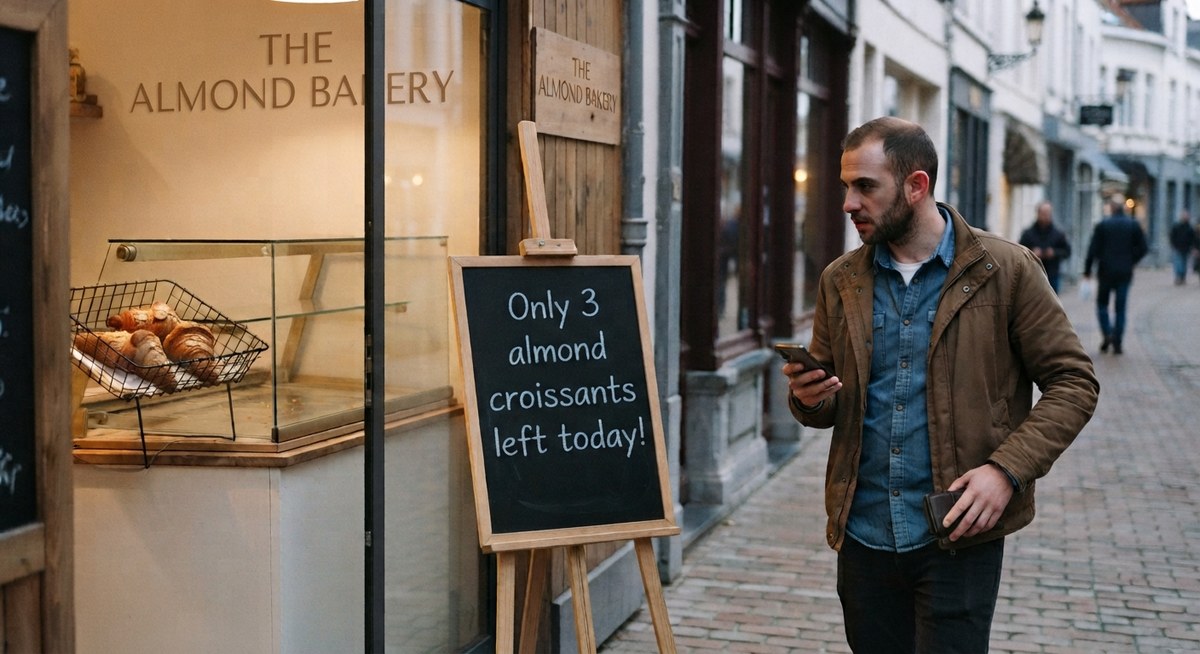
Imagine walking down a quiet street and spotting two bakeries right next to each other. The first has a display case filled with hundreds of golden, fresh croissants sitting comfortably behind glass. The second has a handwritten sign on the door: "Only 3 almond croissants left today!"
Which bakery makes you feel a sudden, quiet tug in your chest? Which one makes you want to open your wallet right now, just in case they sell out before you reach the counter?
If you feel that gentle pull toward the second bakery, you're experiencing one of the most powerful psychological triggers in human behavior: scarcity.
We like to think we're entirely logical. We compare prices, read reviews and weigh our options. But beneath the surface, our brains respond to urgency. When something feels rare, exclusive or fleeting, its value seems to jump.
In this article we'll look at why scarcity works so well in business, how well-known brands use it, and how you can use limited-time offers honestly and effectively.
- People value things more when availability is limited. Psychologist Robert Cialdini lists scarcity among the core principles of persuasion.
- Loss aversion helps explain why: research suggests losses feel roughly twice as powerful as equal gains.
- Supreme limits supply, while Booking.com shows real-time availability. Both are forms of scarcity.
- Fake urgency destroys trust. Be truthful, add real value and keep the scarcity relevant to what you sell.
The Root of the Urgency: Why Our Brains Fear Missing Out
To understand why scarcity is so effective, look back at human history. Long before modern supply chains and 24-hour online shopping, resources were genuinely limited. Food, shelter and safety were never guaranteed.
Our ancestors who acted quickly when resources dwindled were the ones who survived. If berries were ripe for only a short season, the people who gathered them right away did better than those who waited.
In his landmark book Influence, psychologist Robert Cialdini describes scarcity as one of the fundamental principles of persuasion: opportunities seem more valuable to us when their availability is limited. Today we casually call the feeling FOMO, the fear of missing out.
When a customer sees "Sale ends in 3 hours" or "Only 2 items left in stock," the message skips slow, rational thought and triggers an emotional response called loss aversion. Research by psychologists Daniel Kahneman and Amos Tversky suggests that losing something feels roughly twice as painful as gaining the same thing feels good. Scarcity taps into that fear of loss, which is why it speeds up decisions.
When something feels rare, it feels more valuable.
Real-World Examples: How Giants Use Scarcity
You don't have to look far to see scarcity in action. Some of the best-known brands have built their appeal around limited availability.
1. The Master of the Drop: Supreme
The streetwear brand Supreme turned scarcity into a culture. Instead of keeping popular items in stock all the time, it uses a "drop" model: a limited quantity of an item is released on a set day, and once it sells out it typically isn't restocked.
That turns buying a sweatshirt into an event. Fans aren't only buying clothing, they're buying status and exclusivity. The scarcity also feeds a resale market where sought-after pieces often sell for far more than the original price, because people know they might never get another chance.
2. Travel and Hospitality: Booking.com
If you've booked a hotel online, you've probably seen messages like "Only 1 room left on our site!" or "In high demand: booked 4 times in the last hour."
"In high demand: booked 4 times in the last hour."
"Booked by 12 travelers today."
Platforms such as Booking.com show live availability to help people decide. When you're planning a trip it's easy to browse forever, and a gentle nudge about limited availability can turn "I'll think about it" into "I should book this before someone else does." (We look at the same idea in our piece on social proof.)
| Supreme | Booking.com | |
|---|---|---|
| What is limited | The number of items released | The rooms available at a price |
| How it's shown | A drop on a set day, then sold out | Live availability messages |
| What it triggers | Status and exclusivity | Urgency to decide now |
How to Use Scarcity Ethically in Your Business
Scarcity is a powerful sales tool, but it comes with a warning label: trust is fragile.
If you use fake scarcity, such as a countdown timer that resets every time a visitor refreshes the page, or claiming an item is "almost sold out" when your warehouse is full, customers will eventually notice. Once a brand is caught creating false urgency, trust can disappear for good.
| Real scarcity | Fake scarcity |
|---|---|
| Limited seats for a workshop | A countdown timer that resets on every refresh |
| Genuine inventory limits | "Almost sold out" while the warehouse is overflowing |
| A real seasonal deadline | A "final day" that happens again next week |
The Blueprint: Three Rules for Honest Limited-Time Offers
Rule 1: Be truthful
Only create scarcity based on actual limits, such as limited seating for a workshop, real inventory constraints or a genuine seasonal deadline.
Rule 2: Add real value
A limited-time offer should feel like a special privilege for your customers, not a cheap trick to squeeze money out of them. Pair the urgency with a great product or an exclusive bonus.
Rule 3: Keep it relevant
The scarcity should fit what you sell. A software company offering a lifetime license discount during its anniversary week makes sense. A plumber claiming to have "two pipe-fixing slots left today" might feel forced.
Here are three examples of honest wording you can adapt:
Turning Urgency Into Connection
At the end of the day, marketing isn't about pushing people to buy things they don't need. Great marketing helps people make decisions they feel good about.
Procrastination is the silent killer of sales. Customers often genuinely want your product, but human inertia gets in the way. We get distracted, close the browser tab and forget.
With thoughtful, honest scarcity, you aren't tricking your customers. You're giving them a helpful push across the finish line, so they can stop hesitating and start enjoying what your business offers.
Frequently Asked Questions
What is scarcity in marketing?
It's the idea that people place more value on things that are limited in quantity or time. Examples include 'only 3 left,' limited editions and sales that end on a set date.
What does FOMO mean?
FOMO stands for 'fear of missing out.' It's the uneasy feeling that others are enjoying or getting something you might miss, and it often motivates quick decisions.
Why does scarcity make people buy faster?
It triggers loss aversion. Research suggests losing something feels roughly twice as strong as gaining the same thing, so the thought of missing out pushes people to act.
Is scarcity marketing manipulative?
Not when it's truthful. Real limits, such as workshop seats, true stock levels or genuine deadlines, help people decide. Fake urgency is what damages trust.
How can I use limited-time offers without annoying customers?
Be honest about the limit, pair it with real value, keep it relevant to what you sell and don't repeat 'last chance' offers so often that nobody believes them.