
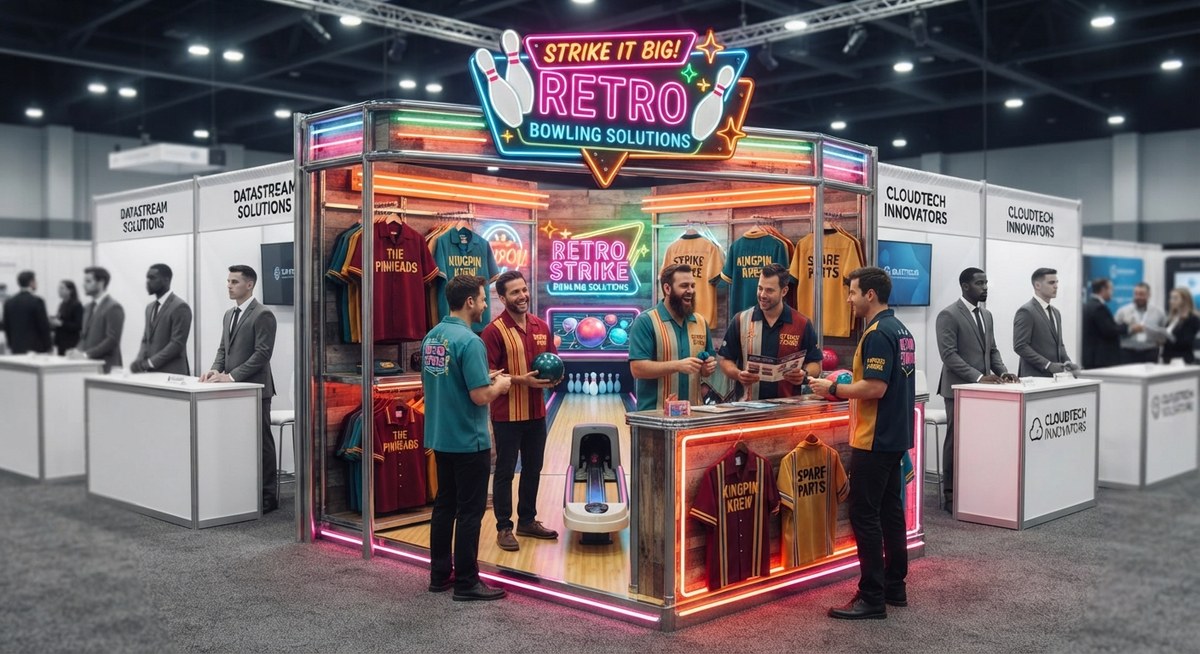
Imagine walking down a long convention hall lined with fifty different tech booths at a major industry expo. Every single booth features a sleek, minimalist white desk. Every representative wears a crisp navy blue blazer. Every corporate banner hanging overhead boasts the exact same bold claims in modern sans-serif font: "We are faster, smarter, more reliable, and more customer-focused than the competition."
You walk past the first ten booths, then the next twenty. By the time you reach the middle of the hall, a strange cognitive phenomenon happens: every single company blurs together into a giant, gray wall of corporate sameness. Even if booth number thirty-seven genuinely has a slightly faster server processing speed or a marginally cheaper subscription fee, you won't remember them. You can't. Your brain has successfully filtered out the noise to protect you from cognitive overload.
Now, imagine walking down that exact same convention hall, and suddenly, booth number thirty-eight comes into view. The walls are painted in bright, vibrant retro neon colors. The representatives are wearing comfortable vintage bowling shirts instead of stiff suits. Instead of a sterile slogan about "synergy and efficiency," their giant neon sign reads: "We break rules so your workflow doesn't have to."
Do you stop? Do you turn your head? Of course you do.
In the crowded landscape of global business, companies waste billions of dollars trying to win a game they are mathematically destined to lose: the game of trying to be "better."
The golden rule of breakthrough branding is simple, counterintuitive, and revolutionary: be different, not better. Better is subjective; different is memorable. Let's explore why chasing marginal improvements leaves brands invisible, and how embracing radical differentiation can turn your business into a household name.
- "Better" is subjective, easily copied, and forces the customer to compare spec sheets before they trust you — that hesitation kills conversions.
- Dollar Shave Club didn't out-engineer Gillette's razors; they occupied an entirely different psychological universe with humor and simplicity.
- Differentiation means identifying what your entire industry does by cliché — then deliberately doing the opposite.
- The ultimate goal of positioning is to own a single word in the customer's mind, the way Volvo owns "safety" and FedEx owns "overnight."
The Trap of the "Better" Game
To understand why trying to be "better" is a losing strategy, you have to look at how human psychology evaluates choices.
When a company sets out to build a brand, their default ambition is to out-feature, out-discount, or out-optimize their competitors. They look at the market leader and think: "Their product is good, but we will make ours 10% faster, add two more features, and charge 5% less."
This sounds logical in a boardroom, but it places you on a relentless, exhausting treadmill known as the Commodity Trap.
Here is why "better" fails as a branding strategy:
- "Better" is entirely subjective: what one customer considers "better" (e.g., maximum technical complexity and customizability), another considers frustrating and overwhelming.
- "Better" is easily copied: if your competitive advantage is that you are slightly cheaper or slightly faster, a competitor can reverse-engineer your advantage and beat your price within three months. You are no longer building a brand; you are running a desperate race to the bottom of profit margins.
- "Better" requires convincing: when you claim you are "better," you force the customer to look at data charts, compare spec sheets, and analyze metrics to verify your claim. You make them think. And when customers have to think, they hesitate.
Differentiation, on the other hand, requires zero comparison charts. You aren't arguing that you are a slightly improved version of the incumbent; you are presenting an entirely new category altogether.
The Power of Radical Distinction: Lessons from Market Rebels
Look at the brands that captured global attention over the last two decades. Did they win by being a "slightly better" version of what already existed?
Think about Dollar Shave Club. When they entered the market, giant legacy brands like Gillette had spent a century perfecting the "better" game — adding five blades, vibrating handles, lubricating strips, and titanium coatings to razors. They marketed their products based on incremental, fractional improvements.
Dollar Shave Club didn't try to build a sharper, more expensive, "better" razor. In fact, their initial marketing video famously mocked the absurdity of high-tech razors with "swivels and lasers." Instead, they differentiated entirely: they offered cheap, high-quality blades delivered straight to your mailbox every month with cheeky, rebellious, unfiltered humor.
They weren't trying to win the razor technology race. They were occupying an entirely different psychological universe. Within just a few years, they captured a massive slice of the global market and sold for a billion dollars — not because their steel was sharper, but because their brand was unforgettable.
When you are different, you don't have to shout to be heard. Your sheer contrast does the work for you.
The Shift: From Competing to Category Creation
Adopting a "different" mindset requires shifting your perspective from competition to creation. You stop looking over your shoulder at what your competitors are doing, and start looking deeply at what your market is ignoring.
Consider how this applies across different industries:
- In consulting: while every other agency promises "comprehensive digital transformation solutions," a boutique firm might differentiate by specializing exclusively in helping solo creators scale to their first $10k month using a single, hyper-specific framework.
- In software: while project management tools battle over who has the most complex database features, Notion won millions of users by making its platform look and feel like a blank, customizable canvas where you could build your own digital home.
- In design: while corporate websites use safe blues and grays to look "professional," a bold brand might use raw typography, unexpected color palettes, and unfiltered human storytelling to stand out instantly in a sea of sameness.
Differentiation isn't about being weird for the sake of being weird. It is about identifying the core values, voice, and visual identity that make your business utterly irreplaceable, and leaning into them without apology.
The Blueprint: How to Inject Distinction Into Your Brand
If you are tired of competing on price and blending in with your industry peers, use these four steps to build an unshakeable identity.
Step 1: Audit Your Industry's "Sea of Sameness"
Look at the top five competitors in your niche. Visit their websites, read their social media posts, and examine their packaging or logos. What are the clichés they all rely on? What words do they all use? (e.g., "innovative," "seamless," "leading provider"). Make a list of those industry norms — and pledge to do the exact opposite.
Step 2: Define Your "Unapologetic Point of View"
A brand that tries to please everyone appeals to no one. What is a belief you hold deeply about your industry that others are afraid to say out loud? Build your messaging around that conviction. Let people either love your stance or disagree with it. Indifference is the true death of a brand; strong reactions create cult-like loyalty.
Step 3: Design for Contrast, Not Conformity
When designing your visual identity, packaging, or website layout, stop asking, "Does this look professional enough?" Instead, ask, "If this was placed next to ten competitors on a screen, would anyone instantly know it's us without reading the logo?" Embrace visual contrast, bold whitespace, and distinct voice tones.
Step 4: Own a Single Word in the Customer's Mind
As marketing strategist Al Ries famously noted, the ultimate goal of positioning is to own a single word in the mind of the consumer. Volvo owns "safety." FedEx owns "overnight." What is the single, distinct concept or feeling you want your audience to associate with your name when nobody is looking? Claim it and protect it ruthlessly.
Conclusion: Stand Out or Stand Aside
In a global marketplace flooded with infinite choices, trying to be a fraction of a percent "better" is a recipe for invisibility.
Stop running on the treadmill of incremental improvements. Stop looking for permission to fit in with the industry standard.
Be bold, be distinct, and be profoundly yourself. Because when you choose to be different instead of better, you stop fighting for scraps in a crowded room — and you build a brand that the world can never forget.
Frequently Asked Questions
Why does trying to be 'better' than competitors usually fail as a branding strategy?
'Better' is subjective, easily copied within months by a competitor, and forces customers to compare spec sheets before trusting you — and when customers have to think that hard, they hesitate instead of buying.
How did Dollar Shave Club beat legacy brands like Gillette without a superior product?
Instead of competing on blade technology, they occupied a completely different psychological space — cheap, simple razors delivered by mail with rebellious humor — so there was nothing to directly compare against Gillette's incremental feature race.
What does 'owning a single word' in branding mean?
It's the idea, from positioning theory, that the goal of a brand is to become the default mental association for one concept — the way Volvo owns 'safety' and FedEx owns 'overnight' — rather than trying to be broadly excellent at everything.
How do I find what makes my brand different from competitors?
Audit the top five competitors in your niche for the clichés and words they all rely on, then deliberately do the opposite. What your entire industry treats as a 'safe default' is usually your biggest differentiation opportunity.
Is being 'different' the same as being weird for its own sake?
No. Differentiation should come from a genuine, unapologetic point of view about your industry — a belief you hold that others are afraid to say out loud — not randomness. Strong reactions build loyalty; being weird without a point builds confusion.