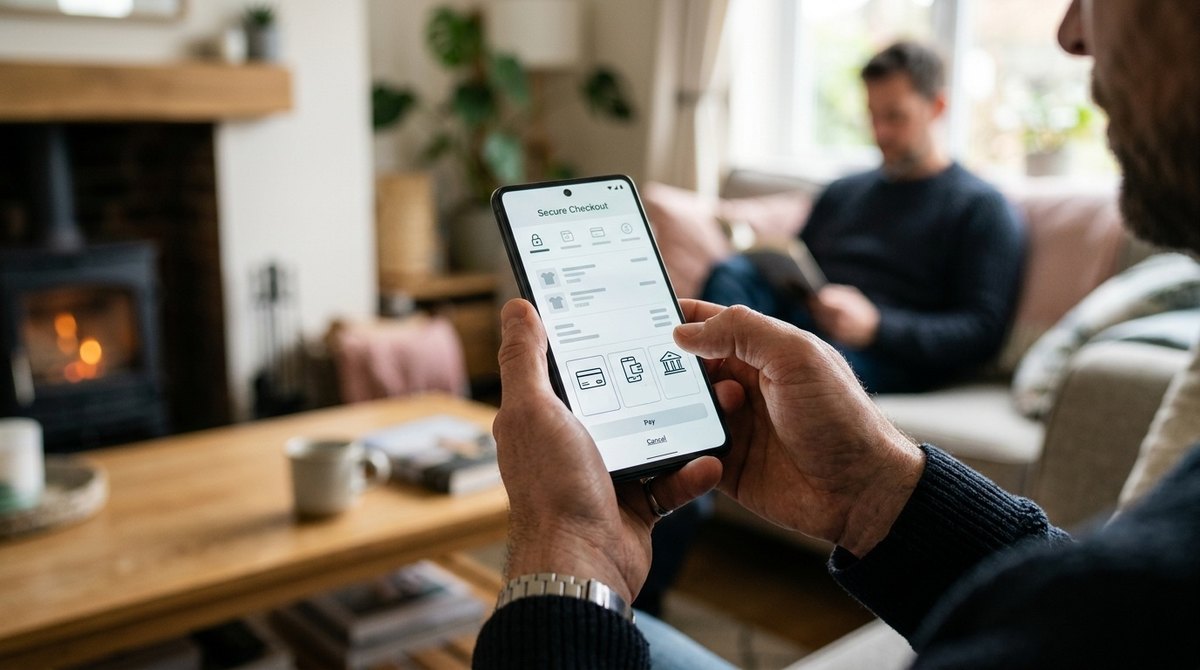
Youssef found the perfect desk lamp online. He picked a color, added it to his cart and tapped "Checkout". Then he saw the payment page: card only, and a long form asking for his billing address.
He was on his phone, his card was in another room, and he usually paid with a digital wallet in seconds. He told himself he'd come back later. He never did.
Somewhere, a shop owner looked at their numbers and wondered why so many people added items to their cart and then disappeared. Often, the answer is the payment page.
- Baymard Institute estimates that about 70% of online shopping carts are abandoned.
- In Baymard's research, 9% of US shoppers who abandoned a checkout said there weren't enough payment methods, and 19% didn't trust the site with their card details.
- Worldpay's 2025 Global Payments Report found digital wallets made up about 53% of global e-commerce spending in 2024.
- Most businesses should offer cards plus at least one popular digital wallet, then add local methods for key markets.
- Modern payment providers can switch on many methods from one dashboard.
The Last Step Where Sales Die
Think about everything that happens before a customer reaches your checkout. They found you, trusted you, chose a product and decided to buy. You've already paid for the ads, the content and the effort that brought them there.
Losing them at the payment step is the most expensive kind of loss, because the hard part is already done. And it often happens for a simple reason: they couldn't pay the way they wanted to.
Every extra step between "I want this" and "paid" is a chance for the customer to change their mind.
What the Data Says
The Baymard Institute, which studies online checkout behavior, estimates the average cart abandonment rate at around 70%, based on dozens of studies. Many of those shoppers were just browsing. But when Baymard asked US shoppers why they abandoned during checkout, several reasons pointed straight at payments:
19%: didn't trust the site with card details
Familiar payment options, like a well-known wallet, can reduce this worry because customers don't have to type their card number into an unknown site.
17%: checkout was too long or complicated
Wallets and saved payment methods can fill in details automatically and shorten checkout.
9%: not enough payment methods
Nearly one in ten shoppers who left during checkout said they simply couldn't pay the way they wanted.
Meanwhile, the way people pay keeps changing. Worldpay's 2025 Global Payments Report found that digital wallets accounted for about 53% of global e-commerce spending in 2024, and that online "buy now, pay later" spending has grown into the hundreds of billions of dollars.
Payment Methods to Consider
Credit and debit cards
Still essential everywhere. Accept the major card networks as a minimum.
Digital wallets
Options like Google Pay, Apple Pay and PayPal let customers pay in a few taps without typing card details. They're especially important on mobile.
Buy now, pay later
Services such as Klarna and Afterpay split a purchase into smaller payments. They can help with higher-priced items, but check the fees and make the terms clear to customers.
Local payment methods
In some countries, a local method dominates: for example, iDEAL in the Netherlands, Pix in Brazil and UPI in India. If you sell into those markets, offering the local favorite can make a big difference.
Bank transfers and invoices
Common for business customers and larger orders, where companies prefer to pay by invoice.
How to Choose the Right Mix
More options aren't automatically better. Twenty payment logos can clutter your checkout and confuse customers. The goal is to offer the methods your customers actually use.
- Start with the basics: cards plus at least one widely used digital wallet.
- Look at where your customers are: check your analytics for the countries most of your visitors and buyers come from, and research the popular payment methods there.
- Consider your price point: buy now, pay later options make more sense for a $400 product than a $15 one.
- Think about who buys: business customers often need invoices. Younger shoppers often prefer wallets.
- Ask: a single question in your post-purchase email, "Was there a payment method you wished we offered?", gives you real answers.
Setting Up Without Headaches
The good news is that you rarely need separate contracts for each method. Payment providers like Stripe, PayPal and Square, as well as most major e-commerce platforms, let you turn on several payment methods from one dashboard. Availability depends on your country and business type, so check what your provider supports.
Before you launch a new method, test the full checkout yourself on a phone. Most shoppers will pay on a small screen, so the experience there matters most. Our guide to checking your tools on mobile covers what to look for.
And keep security front of mind. Use a reputable provider, never store card numbers yourself and protect your accounts with strong passwords and two-factor authentication, as we explain in cybersecurity basics.
Payment Mistakes to Avoid
Surprise fees at checkout
Baymard found extra costs were the top reason for abandonment. Show shipping and fees early, not on the payment page.
Forcing account creation
Let customers check out as guests. You can invite them to create an account after the purchase.
Hiding payment options
Show accepted payment methods on product pages and in the cart, so customers know before they start checkout.
Ignoring failed payments
Declined cards happen. Show a clear, friendly message and offer another method instead of a confusing error.
Conclusion: Let Customers Pay Their Way
Youssef wanted that lamp. He was ready to buy. All the shop needed was one more way to pay. Your checkout should make paying the easiest part of the journey, not the hardest.
This week, go through your own checkout on your phone, note every payment method you offer and compare it with what your customers use. If a popular wallet is missing, add it. The easier it is to pay, the more customers will.
Frequently Asked Questions
How many payment methods should an online store offer?
Start with cards and at least one popular digital wallet, then add methods your specific customers and markets use. Too many logos can clutter checkout.
Do digital wallets increase sales?
They can reduce friction and trust worries because customers pay in a few taps without typing card details. Worldpay found wallets made up about 53% of global e-commerce spend in 2024.
Should I offer buy now, pay later?
It can help for higher-priced products. Check the provider's fees and make sure customers clearly understand the repayment terms.
Why do customers abandon checkout?
Common reasons include surprise costs, forced account creation, long or complicated checkouts, distrust of the site with card details and missing payment methods.
Which payment providers support multiple methods?
Providers such as Stripe, PayPal and Square, and most major e-commerce platforms, let you enable cards, wallets and other methods from one dashboard, depending on your country.