You've probably seen it. A big red banner says "Sale ends in 00:14:59", and the seconds tick down. You feel the pressure, so you hurry. Then you come back the next day, and the same sale is still there, with a fresh 15-minute timer.
That little trick might win a sale today. But it costs something bigger: the moment a customer notices, they stop believing anything else you say.
Urgency works. It's one of the most reliable ways to turn "maybe later" into "yes, now". In our article on the psychology of scarcity, we explained why. This guide is about the practical side: how to create urgency that's real, honest and still effective.
- Fake urgency, like resetting countdown timers or false "only 2 left" claims, destroys trust once customers notice.
- The UK's Competition and Markets Authority took Emma Sleep to court over misleading countdown timers and "high demand" claims.
- The US Federal Trade Commission has named fake timers and false scarcity as deceptive "dark patterns".
- Honest urgency comes from real limits: real deadlines, real capacity, real stock and real seasons.
- If your deadline passes, the offer must actually end.
The Timer That Never Ended
The problem with fake urgency isn't that it doesn't work. It's that it works once. Customers talk, they compare and they come back. When they see the "last chance" offer still running a week later, they learn two lessons: your deadlines mean nothing, and your words can't be trusted.
From that moment, every future offer is weaker. The customer who would have rushed to buy your genuine limited edition now waits, assuming it will come back. You've trained your audience to ignore you.
Fake urgency borrows sales from your future and pays them back with your reputation.
Why Fake Urgency Backfires
It damages trust
Trust is the foundation of every sale. Once customers catch one false claim, they question your prices, your reviews and your product promises too.
It increases regret and returns
People pushed into rushed decisions are more likely to feel buyer's remorse, ask for refunds or leave bad reviews.
It makes deadlines meaningless
If every week is a "final sale", no sale is final. Your real launches lose their power.
Regulators Are Watching
Fake urgency is no longer just a reputation risk. It's a legal one.
In the UK, the Competition and Markets Authority (CMA) investigated mattress brand Emma Sleep over countdown timers that suggested discounts were about to end, when the same offers kept running afterwards, and over claims that products were "in high demand". The case went to court, and the company admitted breaching consumer law and gave binding promises, endorsed by the High Court, not to use misleading timers or demand claims.
In the United States, the Federal Trade Commission published a 2022 staff report called "Bringing Dark Patterns to Light". It listed tactics such as fake countdown timers and false claims of limited stock or high demand among the design tricks that can mislead consumers.
Rules differ by country, and this isn't legal advice. But the direction is clear: if your urgency isn't true, you're taking a risk with both customers and regulators.
Six Sources of Honest Urgency
The good news is that real businesses have real limits. You don't need to invent pressure. You need to explain the pressure that already exists.
1. Real capacity
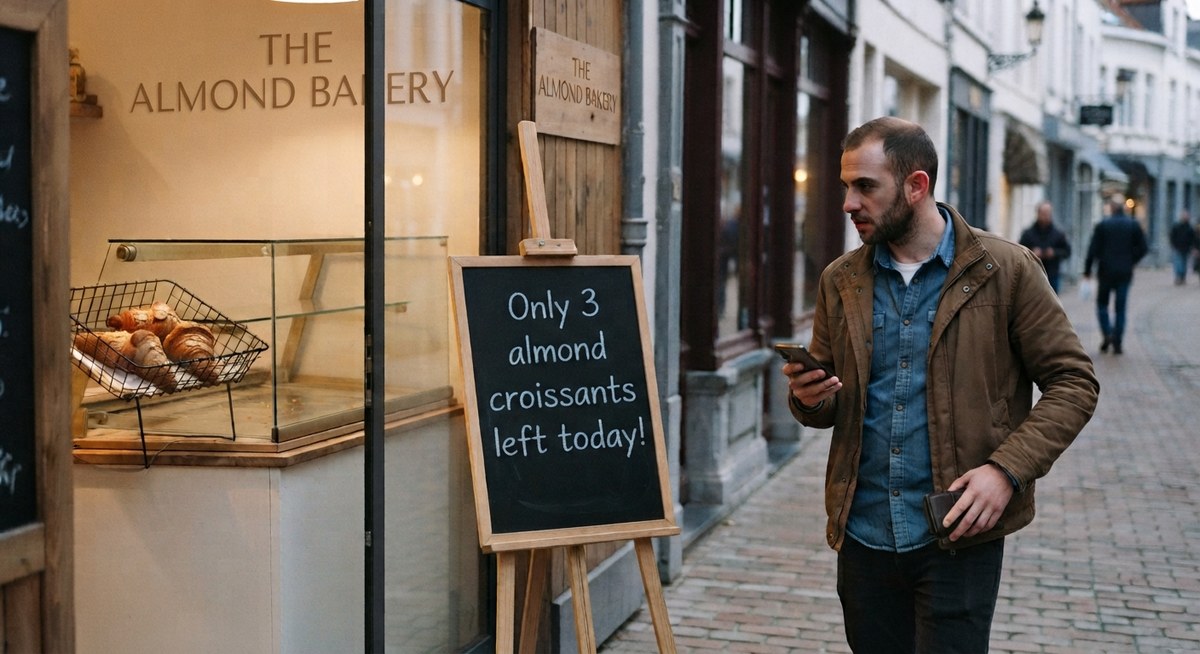
A coach can only take eight clients a month. A bakery can only bake 40 loaves a morning. Say so. "We take 8 new clients a month, and 3 spots are left for November" is urgent because it's true.
2. Real launch windows
Courses with a start date, cohorts and group programs naturally close. "Enrollment closes Friday because the program starts Monday" needs no exaggeration.
3. Real limited batches
Small-batch products, seasonal flavors and limited editions run out. Share the batch size and don't restock the same "limited" item next week.
4. Real seasons and events
Holidays, back-to-school and shipping cut-off dates are deadlines your customers already understand. "Order by December 18 for delivery before the holidays" is useful information, not pressure.
5. Real price changes
If prices are going up next month because costs rose, tell customers early. Giving them the chance to buy at today's price builds goodwill.
6. Real early-bird rewards
Reward people who commit early with a bonus or a lower price that genuinely ends on a set date.
Writing Urgency Without Hype
Honest urgency sounds calm and specific. Hype sounds loud and vague. Compare these:
Honest: "Our autumn batch is 120 candles. When they're gone, the next batch is in March."
Hype: "Only a few spots left!!!"
Honest: "I work with six clients at a time. Two places open on November 1."
Notice that the honest versions give a reason and a number. Reasons make limits believable. Numbers make them concrete. Being specific is one of the strongest ways to be persuasive, as we explain in specificity sells.
Also, remind people kindly. A short email the day before a real deadline isn't pushy. Many customers genuinely want the offer and simply forgot. A reminder helps them.
The Honesty Checklist
Before you launch any time-limited or stock-limited offer, ask these questions:
- Is the deadline real, and will the offer truly end when it passes?
- If I say stock is limited, is that number accurate right now?
- Does every countdown timer show the same end time to every visitor, and stop at zero?
- Would I be comfortable if a customer screenshotted this and compared it next week?
- Is the "was" price a price I really charged?
If you can't answer "yes" to all of them, change the offer, not just the wording.
Conclusion: Let Real Limits Do the Work
Urgency isn't manipulation when it's true. It's information. Customers deserve to know when an offer ends, how many spots are left and when the next batch arrives. Telling them helps them decide.
This month, find one real limit in your business, explain it clearly with a reason and a number, and stick to it when the deadline comes. When your deadlines are real, customers learn to act on them.
Frequently Asked Questions
Is it legal to use countdown timers?
Timers can be fine when they're accurate. Regulators like the UK's CMA and the US FTC have acted against timers that reset or offers that continue after the timer ends. Check the rules in your country.
What is fake urgency?
Pressure based on false claims, such as deadlines that don't end, invented 'only 2 left' messages or made-up high demand.
How do I create urgency honestly?
Use real limits: genuine deadlines, limited capacity, small batches, seasonal cut-offs and real price changes, and explain the reason behind each one.
Does urgency still work if it's honest?
Yes. Real limits with a clear reason and a specific number are persuasive, and they build trust instead of damaging it.
What should I do when a deadline passes?
End the offer as promised. Extending 'final' offers teaches customers to ignore your deadlines in the future.