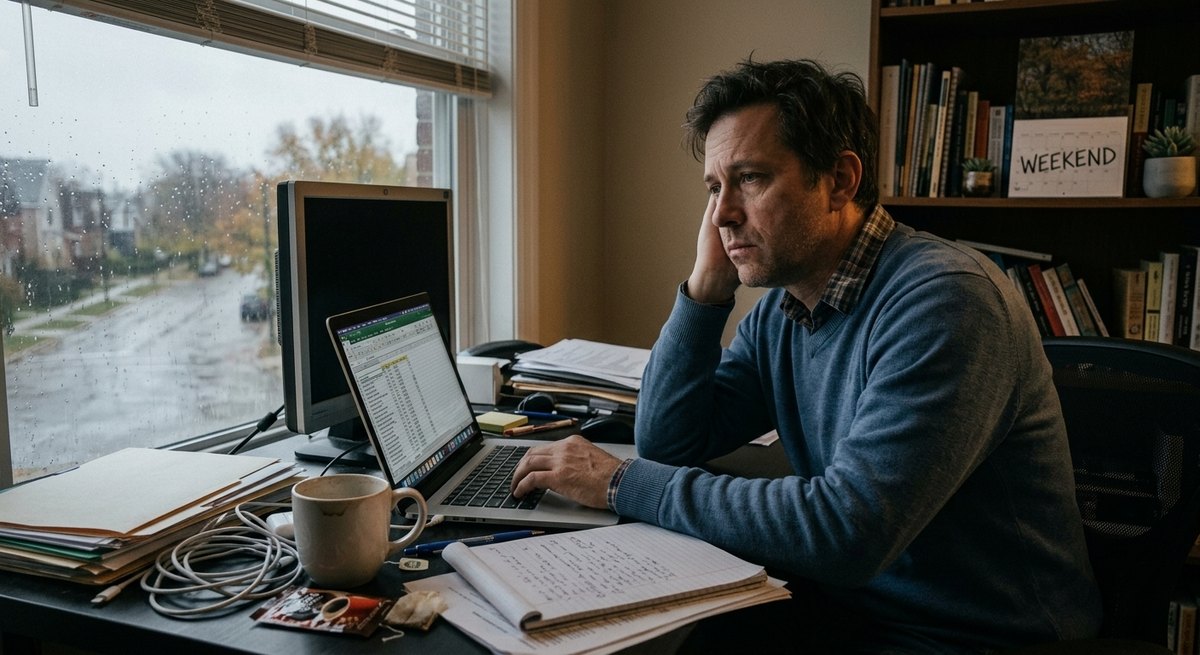
A potential client emails you on a Friday afternoon. The project is small, the budget is low and the deadline is unrealistic. Your gut says no. But you hear yourself typing, "Sure, happy to help!"
Three weeks later you're working late, your best client is waiting on a delayed delivery and the big project you've been meaning to start is still sitting in a folder.
Here's the uncomfortable truth: every time you say yes to a mediocre opportunity, you're quietly saying no to a potentially great one. Your time and energy are limited. Spend them on everything, and you'll have nothing left for the work that matters most.
We've written before about why focus beats doing ten things at once. This article is about the practical part: how to actually say no, kindly and clearly, without damaging relationships.
- Every yes has a hidden cost: the time and energy it takes away from something better.
- Steve Jobs summed it up simply: "Focusing is about saying no."
- Research suggests "I don't" is a more powerful refusal than "I can't."
- Short, warm, honest scripts make saying no much easier, with clients, partners and friends.
The Hidden Cost of Every Yes
When Steve Jobs returned to Apple in 1997, the company was making too many products and going in too many directions. At that year's developer conference, he explained why he was cutting projects people had worked hard on. His conclusion was simple: "Focusing is about saying no."
The same rule applies to a one-person business. A low-paying client doesn't just take the hours you bill. It takes the energy you'd have spent finding a better client, the focus you'd have spent on your best work and sometimes your evenings with family.
A yes to the wrong thing is a no to the right thing.
There's a line often attributed to Warren Buffett: successful people say no to almost everything. Whoever said it first, most experienced business owners learn the lesson the hard way.
Why Saying No Feels So Hard
If saying no is so useful, why do we avoid it? Usually for very human reasons:
Fear of missing out
What if this small project turns into something big? Sometimes it does. Most of the time, it simply turns into more small projects.
Fear of disappointing people
We want to be liked and helpful. Saying no can feel like letting someone down, even when it's the honest answer.
Money worries
When income is uncertain, every offer feels like one you can't afford to refuse. But underpriced work often keeps you too busy to find better-paid work.
The Power of "I Don't"
The words you use when you say no matter more than you might think. Researchers Vanessa Patrick and Henrik Hagtvedt studied this in a paper published in the Journal of Consumer Research. In one experiment, people practiced refusing temptation by saying either "I can't" or "I don't." Afterward, they were offered a thank-you gift: a chocolate bar or a granola bar.
Among those who had used "I don't," 64% chose the healthier granola bar. Among those who had used "I can't," only 39% did. The researchers found that "I don't" made people feel more in control. It sounds like a personal rule, not a restriction someone else imposed.
You can use the same idea in business. Turn your boundaries into simple personal policies:
"I don't do free trial work, but I'm happy to share examples."
"I don't check work email on weekends."
A policy feels less personal than a refusal. You're not rejecting the person. You're simply explaining how you work.
Scripts for Saying No (Without Burning Bridges)
To a client whose budget doesn't fit
To a partnership that isn't right
To a friend asking for free work
To a request you might accept later
Five Rules for a Graceful No
1. Say it early
A quick no is kinder than a slow maybe. People can make other plans when they know where they stand.
2. Keep it short
You don't need a long list of excuses. One honest reason is enough, and sometimes none is needed.
3. Be warm
Thank them for asking. Saying no to a request is not the same as saying no to the person.
4. Offer an alternative if you can
Suggest someone else, a smaller option or a later date. It keeps the relationship positive.
5. Don't apologize too much
Protecting your time isn't something to feel guilty about. A simple, confident tone earns more respect than a nervous one.
If you'd like to go deeper, negotiation expert William Ury wrote a whole book on this skill, The Power of a Positive No. His core idea is that a good no protects what you value most, which makes it a yes to something more important.
Conclusion: Protect Your Big Yes
Saying no isn't about being difficult. It's about being honest with others and with yourself about where your energy should go.
This week, pick one request you've been avoiding and answer it clearly. Write down one personal policy that starts with "I don't." Every graceful no makes room for the yes that could change your business.
Frequently Asked Questions
How do I say no to a client politely?
Thank them, give one honest reason, such as budget or timing, and offer an alternative if you can, like a referral or a future date.
Is it bad for business to turn down work?
Not when the work is a poor fit. Low-paying or off-target projects can take time away from better clients and your most important goals.
Why is 'I don't' better than 'I can't'?
Research by Vanessa Patrick and Henrik Hagtvedt found that 'I don't' feels like a personal choice, which gives people a stronger sense of control and makes the refusal more effective.
How do I say no to a friend asking for free work?
Be warm and honest. Explain that you're not taking free projects right now and offer something small, like a short call or a useful resource.
What if I regret saying no?
Leave the door open. Phrases like 'not right now' or 'let's talk again in March' let you revisit the opportunity later.